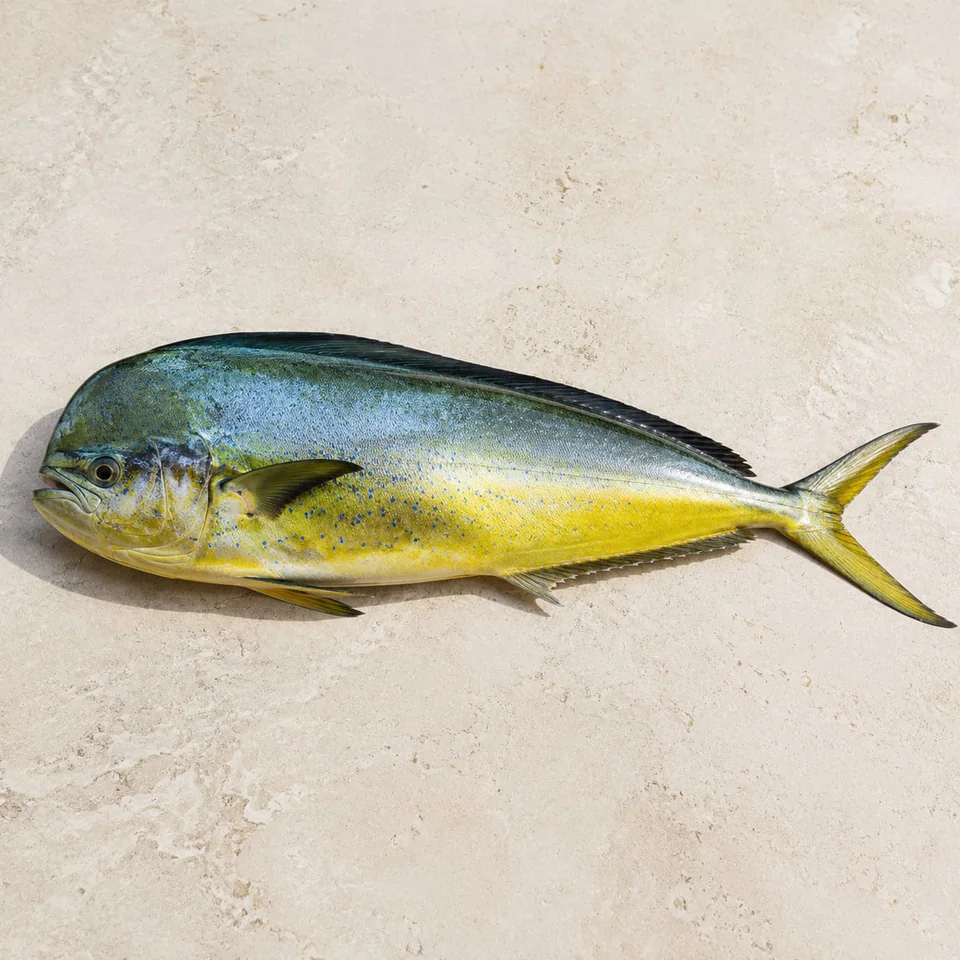
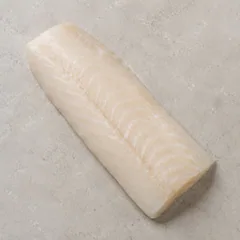
Mahi mahi, also called dolphinfish or dorado, is a lean saltwater fish with a firm, moist texture and a mild, slightly sweet flavor. Its sturdy fillets hold up well to high-heat cooking methods such as grilling, searing, and baking, and it is a popular choice in seafood tacos and tropical-style dishes.
Nutritionally, mahi mahi is a lean source of high-quality protein and is low in fat and carbohydrates. It also supplies B vitamins and minerals such as selenium and phosphorus. Its mild flavor and lean profile make it a versatile staple for balanced, protein-focused meals.
Plane deine Portion
Wie viel ist in Ihrer Portion von Mahi Mahi?
Nutrition values are reported per 100 g of raw edible mahi mahi. A typical fillet weighs about 113 g (4 oz) and provides roughly 95 kcal. Use the serving sizes below to estimate portions when logging.
Berechnet aus der Referenz pro 100 g. Werte sind gerundet.
Portion
Gewicht
Kalorien
Kohlenhydrate
Protein
Fett
100 g
100 g
84 kcal
0.3 g
19.8 g
0.4 g
1 fillet (4 oz)
113 g
94.9 kcal
0.3 g
22.4 g
0.4 g
Verwenden Sie das Gewicht des essbaren Anteils im oben gezeigten Lebensmittelzustand.
Energie (kcal)
84 kcal
Energie (kJ)
350.2 kJ
Protein
19.7938 g
Kohlenhydrate
0.28655 g
Fett
0.3767 g
Ballaststoffe
0 g
Natrium
51.93 mg
Kalzium
6.003 mg
Kalium
407.9 mg
Magnesium
28.02 mg
Eisen
0.05167 mg
Zink
0.2963 mg
Vitamin B12
1.343 µg
Fragen und Antworten
Mahi Mahi Ernährungs-FAQ
Is mahi mahi high in protein?
Yes. A 100 g serving of raw mahi mahi provides about 20 g of protein with very little fat.
How many calories are in mahi mahi?
A 100 g serving of raw mahi mahi has about 84 kcal. A typical 4 oz (113 g) fillet provides roughly 95 kcal.
How is mahi mahi usually cooked?
Mahi mahi is commonly grilled, seared, or baked, thanks to its firm texture that holds up well to high heat.