Nutrition facts
Per 100 millilitres
Measurement basis
- Food state
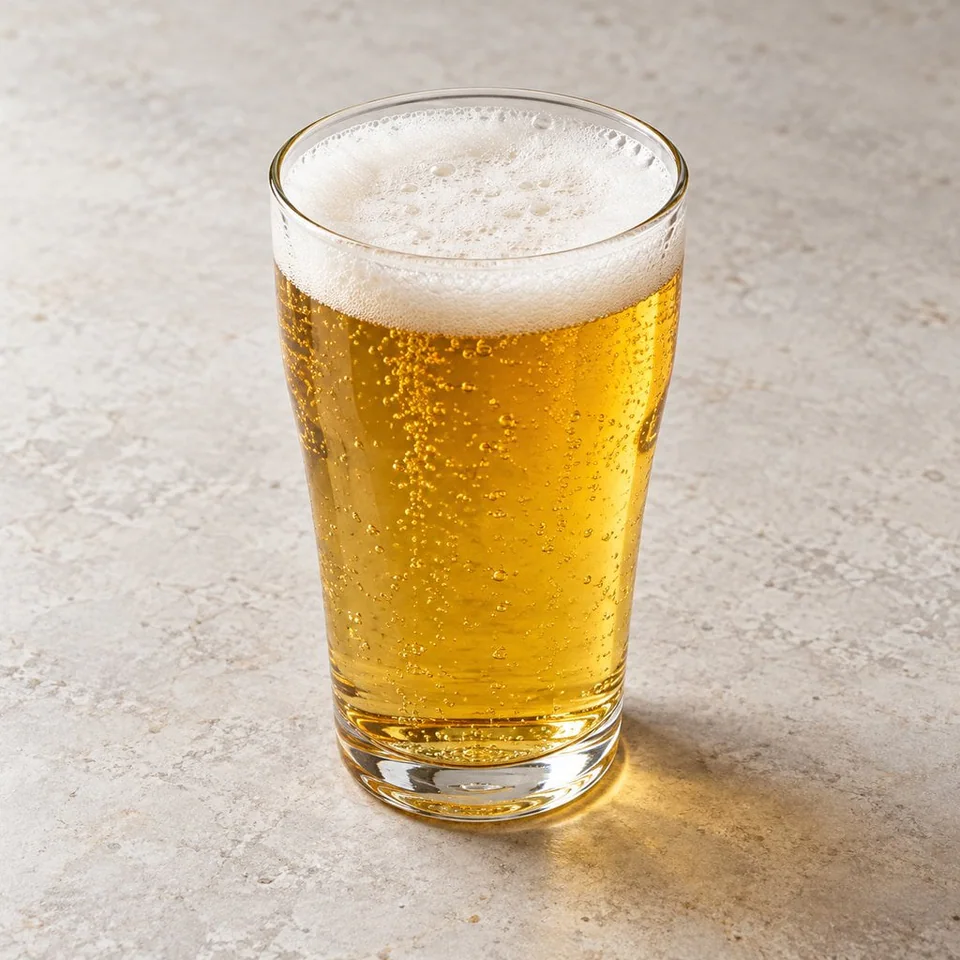
- Beer
- Edible portion
- Beer; as-consumed edible material, not dry ingredient unless explicitly described
- Measurement basis
- Per100 ml of the food as described
- Energy (kcal)1
- 43.6201 kcal
- Protein
- 0.466634 g
- Carbohydrates
- 3.60119 g
- Fat
- 0 g
- Dietary fiber
- 0 g
- Sugars
- 0 g
- Saturated fat
- 0 g
- Sodium
- 4.05768 mg
More nutrients22
- Energy (kJ)1
- 182.5 kJ
- Cholesterol
- 0 mg
- Calcium
- 4.05768 mg
- Potassium
- 27.3894 mg
- Magnesium
- 6.08652 mg
- Iron
- 0.0202884 mg
- Zinc
- 0.0101442 mg
- Vitamin B1
- 0.0050721 mg
- Vitamin B2
- 0.0253605 mg
- Vitamin B3
- 0.520398 mg
- Vitamin B6
- 0.0466634 mg
- Vitamin B9 (folate)
- 6.08652 µg
- Vitamin B12
- 0.0202884 µg
- Vitamin C
- 0 mg
- Vitamin D
- 0 µg
- Vitamin A (RAE)
- 0 µg
- Retinol
- 0 µg
- Beta-carotene
- 0 µg
- Alpha-carotene
- 0 µg
- Beta-cryptoxanthin
- 0 µg
- Vitamin E (alpha-tocopherol)
- 0 mg
- Vitamin K1 (phylloquinone)
- 0 µg
- Calculated energy value.