Lebensmitteldaten können auf Englisch angezeigt werden, wenn keine Übersetzung verfügbar ist.

MangoErnährungsreferenz
Obst

Mango

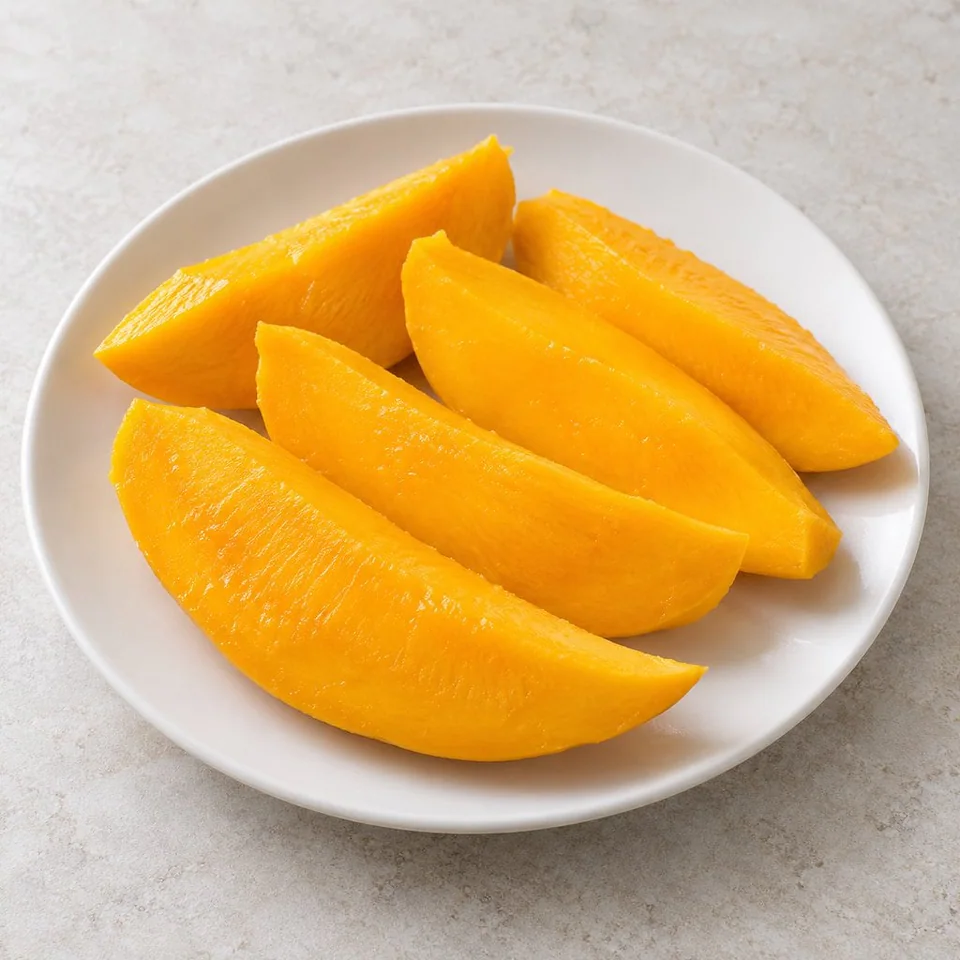
Mango is a sweet, juicy tropical fruit with golden-orange flesh and a large flat pit. Per 100 g it provides 60 calories with 15 g carbs and 1.6 g fiber.

60
kcalpro 100g
Kohlenhydrate
14.98g
Protein
0.82g
Fett
0.38g

Nährwertangaben

Pro 100 Gramm

Referenzwerte
Messgrundlage
Lebensmittelzustand
Raw
Essbarer Anteil
Fresh flesh, skin and pit removed
Messgrundlage
Per 100 g raw edible portion
Energie (kcal)
60 kcal
Protein
0.82 g
Kohlenhydrate
14.98 g
Fett
0.38 g
Ballaststoffe
1.6 g
Zucker
13.66 g
Gesättigte Fettsäuren
0.092 g
Natrium
1 mg
Weitere Nährstoffe24
Energie (kJ)
251 kJ
Transfett1
0 g
Cholesterin1
0 mg
Kalzium
11 mg
Kalium
168 mg
Magnesium
10 mg
Eisen
0.16 mg
Zink
0.09 mg
Vitamin B1
0.028 mg
Vitamin B2
0.038 mg
Vitamin B3
0.669 mg
Vitamin B5
0.197 mg
Vitamin B6
0.119 mg
Vitamin B9 (Folat)
43 µg
Vitamin B121
0 µg
Vitamin C
36.4 mg
Vitamin D1
0 µg
Vitamin A (RAE)
54 µg
Retinol1
0 µg
Beta-Carotin
640 µg
Alpha-Carotin
9 µg
Beta-Cryptoxanthin
10 µg
Vitamin E (Alpha-Tocopherol)
0.9 mg
Vitamin K1 (Phyllochinon)
4.2 µg
  1. Von der Quelle als null angenommen

Datenquellen

2
  1. 1

    CaloriePilot curated nutrition base

    169910 · SR Legacy, April 2018 release

  2. 2

    日本文部科学省

    07132 · 日本食品標準成分表(八訂)増補2023年

Über dieses Lebensmittel

Diese Nährwertreferenz verstehen

Mango is a sweet, juicy tropical fruit with golden-orange flesh and a large flat pit. It is eaten fresh, and is also used in smoothies, salsas, desserts, and dried form.

Nutritionally, mango is mostly water and natural sugar. Per 100 g it provides about 60 kcal, 15 g of carbohydrates, 0.8 g of protein, and 0.4 g of fat, with 1.6 g of dietary fiber, 1 mg of sodium, and 11 mg of calcium.

Mango flesh is cut away from the skin and pit before eating. For accurate tracking, weigh the flesh without the skin and pit, and use the serving sizes below.

Plane deine Portion

Wie viel ist in Ihrer Portion von Mango?

Nutrition values are reported per 100 g. A typical 1 cup of sliced mango (about 165 g) provides roughly 99 kcal. Use the serving sizes below to estimate portions when logging.

Berechnet aus der Referenz pro 100 g. Werte sind gerundet.
PortionGewichtKalorienKohlenhydrateProteinFett
100 g100 g60 kcal15 g0.8 g0.4 g
1 cup sliced165 g99 kcal24.7 g1.4 g0.6 g
1/2 cup sliced82 g49.2 kcal12.3 g0.7 g0.3 g

Verwenden Sie das Gewicht des essbaren Anteils im oben gezeigten Lebensmittelzustand.

Energie (kcal)
60 kcal
Energie (kJ)
251 kJ
Protein
0.82 g
Kohlenhydrate
14.98 g
Fett
0.38 g
Ballaststoffe
1.6 g
Zucker
13.66 g
Gesättigte Fettsäuren
0.092 g
Transfett1
0 g
Cholesterin1
0 mg
Natrium
1 mg
Kalzium
11 mg
Kalium
168 mg
Magnesium
10 mg
Eisen
0.16 mg
Zink
0.09 mg
Vitamin B1
0.028 mg
Vitamin B2
0.038 mg
Vitamin B3
0.669 mg
Vitamin B5
0.197 mg
Vitamin B6
0.119 mg
Vitamin B9 (Folat)
43 µg
Vitamin B121
0 µg
Vitamin C
36.4 mg
Vitamin D1
0 µg
Vitamin A (RAE)
54 µg
Retinol1
0 µg
Beta-Carotin
640 µg
Alpha-Carotin
9 µg
Beta-Cryptoxanthin
10 µg
Vitamin E (Alpha-Tocopherol)
0.9 mg
Vitamin K1 (Phyllochinon)
4.2 µg

Fragen und Antworten

Mango Ernährungs-FAQ

How many calories are in a mango?

Mango provides about 60 calories per 100 g. A typical 1 cup of sliced mango (about 165 g) provides roughly 99 calories.

Is mango high in sugar?

Mango provides about 15 g of carbohydrates per 100 g, mostly natural sugars, making it one of the sweeter fruits.

How do you cut a mango?

Mango flesh is cut away from the large flat pit, then the skin is removed or the flesh is scored. Weigh only the edible flesh for accurate tracking.