Los datos de los alimentos pueden mostrarse en inglés cuando no haya traducción disponible.

MangoReferencia nutricional
Frutas

Mango

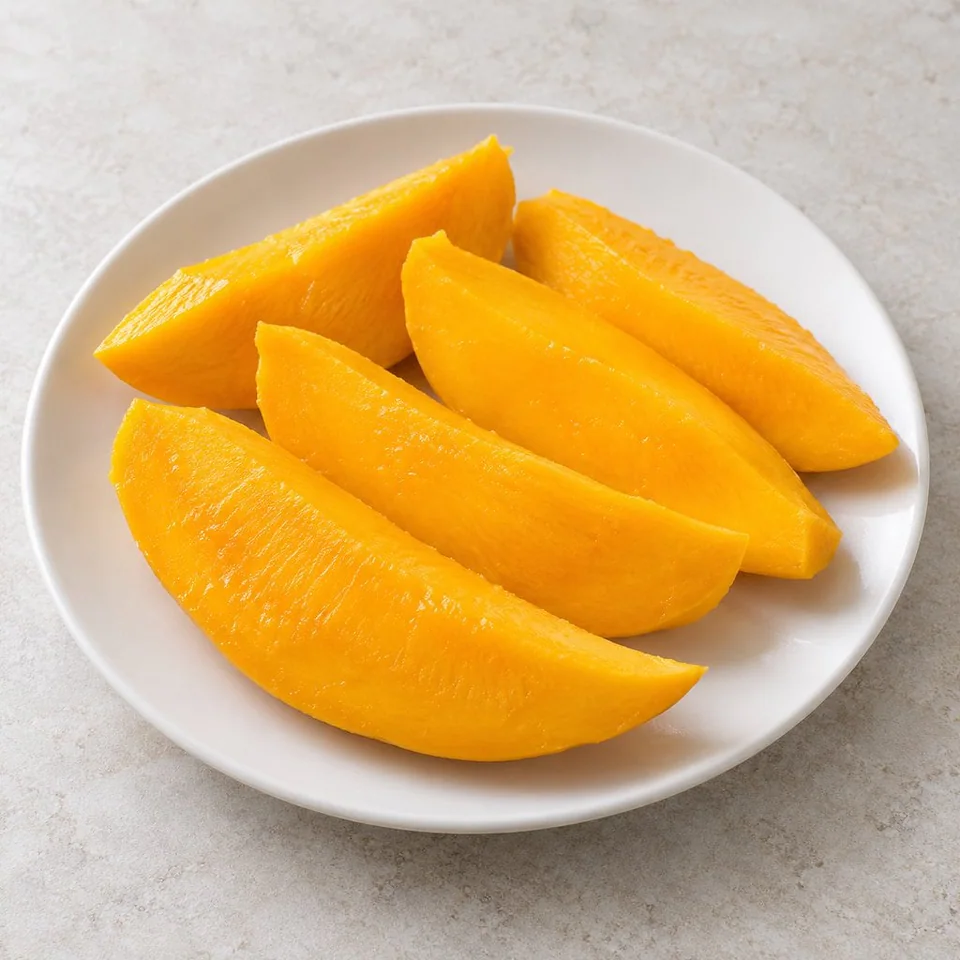
Mango is a sweet, juicy tropical fruit with golden-orange flesh and a large flat pit. Per 100 g it provides 60 calories with 15 g carbs and 1.6 g fiber.

60
kcalpor 100g
Carbohidratos
14.98g
Proteína
0.82g
Grasa
0.38g
Explorar todos los alimentos

Información nutricional

Por cada 100 gramos

Valores de referencia
Base de medición
Estado del alimento
Raw
Porción comestible
Fresh flesh, skin and pit removed
Base de medición
Per 100 g raw edible portion
Energía (kcal)
60 kcal
Proteína
0.82 g
Carbohidratos
14.98 g
Grasa
0.38 g
Fibra dietética
1.6 g
Azúcares
13.66 g
Grasa saturada
0.092 g
Sodio
1 mg
Más nutrientes24
Energía (kJ)
251 kJ
Grasas trans1
0 g
Colesterol1
0 mg
Calcio
11 mg
Potasio
168 mg
Magnesio
10 mg
Hierro
0.16 mg
Zinc
0.09 mg
Vitamina B1
0.028 mg
Vitamina B2
0.038 mg
Vitamina B3
0.669 mg
Vitamina B5
0.197 mg
Vitamina B6
0.119 mg
Vitamina B9 (folato)
43 µg
Vitamina B121
0 µg
Vitamina C
36.4 mg
Vitamina D1
0 µg
Vitamina A (RAE)
54 µg
Retinol1
0 µg
Betacaroteno
640 µg
Alfa-caroteno
9 µg
Beta-criptoxantina
10 µg
Vitamina E (alfa-tocoferol)
0.9 mg
Vitamina K1 (filoquinona)
4.2 µg
  1. Se asume cero según la fuente

Fuentes de datos

2
  1. 1

    CaloriePilot curated nutrition base

    169910 · SR Legacy, April 2018 release

  2. 2

    日本文部科学省

    07132 · 日本食品標準成分表(八訂)増補2023年

Acerca de este alimento

Comprender esta referencia nutricional

Mango is a sweet, juicy tropical fruit with golden-orange flesh and a large flat pit. It is eaten fresh, and is also used in smoothies, salsas, desserts, and dried form.

Nutritionally, mango is mostly water and natural sugar. Per 100 g it provides about 60 kcal, 15 g of carbohydrates, 0.8 g of protein, and 0.4 g of fat, with 1.6 g of dietary fiber, 1 mg of sodium, and 11 mg of calcium.

Mango flesh is cut away from the skin and pit before eating. For accurate tracking, weigh the flesh without the skin and pit, and use the serving sizes below.

Planifica tu porción

¿Cuánto hay en tu porción de Mango?

Nutrition values are reported per 100 g. A typical 1 cup of sliced mango (about 165 g) provides roughly 99 kcal. Use the serving sizes below to estimate portions when logging.

Calculado a partir de la referencia por cada 100 g. Los valores están redondeados.
PorciónPesoCaloríasCarbohidratosProteínaGrasa
100 g100 g60 kcal15 g0.8 g0.4 g
1 cup sliced165 g99 kcal24.7 g1.4 g0.6 g
1/2 cup sliced82 g49.2 kcal12.3 g0.7 g0.3 g

Utilice el peso de la porción comestible en el estado del alimento mostrado arriba.

Energía (kcal)
60 kcal
Energía (kJ)
251 kJ
Proteína
0.82 g
Carbohidratos
14.98 g
Grasa
0.38 g
Fibra dietética
1.6 g
Azúcares
13.66 g
Grasa saturada
0.092 g
Grasas trans1
0 g
Colesterol1
0 mg
Sodio
1 mg
Calcio
11 mg
Potasio
168 mg
Magnesio
10 mg
Hierro
0.16 mg
Zinc
0.09 mg
Vitamina B1
0.028 mg
Vitamina B2
0.038 mg
Vitamina B3
0.669 mg
Vitamina B5
0.197 mg
Vitamina B6
0.119 mg
Vitamina B9 (folato)
43 µg
Vitamina B121
0 µg
Vitamina C
36.4 mg
Vitamina D1
0 µg
Vitamina A (RAE)
54 µg
Retinol1
0 µg
Betacaroteno
640 µg
Alfa-caroteno
9 µg
Beta-criptoxantina
10 µg
Vitamina E (alfa-tocoferol)
0.9 mg
Vitamina K1 (filoquinona)
4.2 µg

Preguntas y respuestas

Mango preguntas frecuentes sobre nutrición

How many calories are in a mango?

Mango provides about 60 calories per 100 g. A typical 1 cup of sliced mango (about 165 g) provides roughly 99 calories.

Is mango high in sugar?

Mango provides about 15 g of carbohydrates per 100 g, mostly natural sugars, making it one of the sweeter fruits.

How do you cut a mango?

Mango flesh is cut away from the large flat pit, then the skin is removed or the flesh is scored. Weigh only the edible flesh for accurate tracking.