I dati sugli alimenti possono essere mostrati in inglese quando una traduzione non è disponibile.

MangoRiferimento nutrizionale
Frutta

Mango

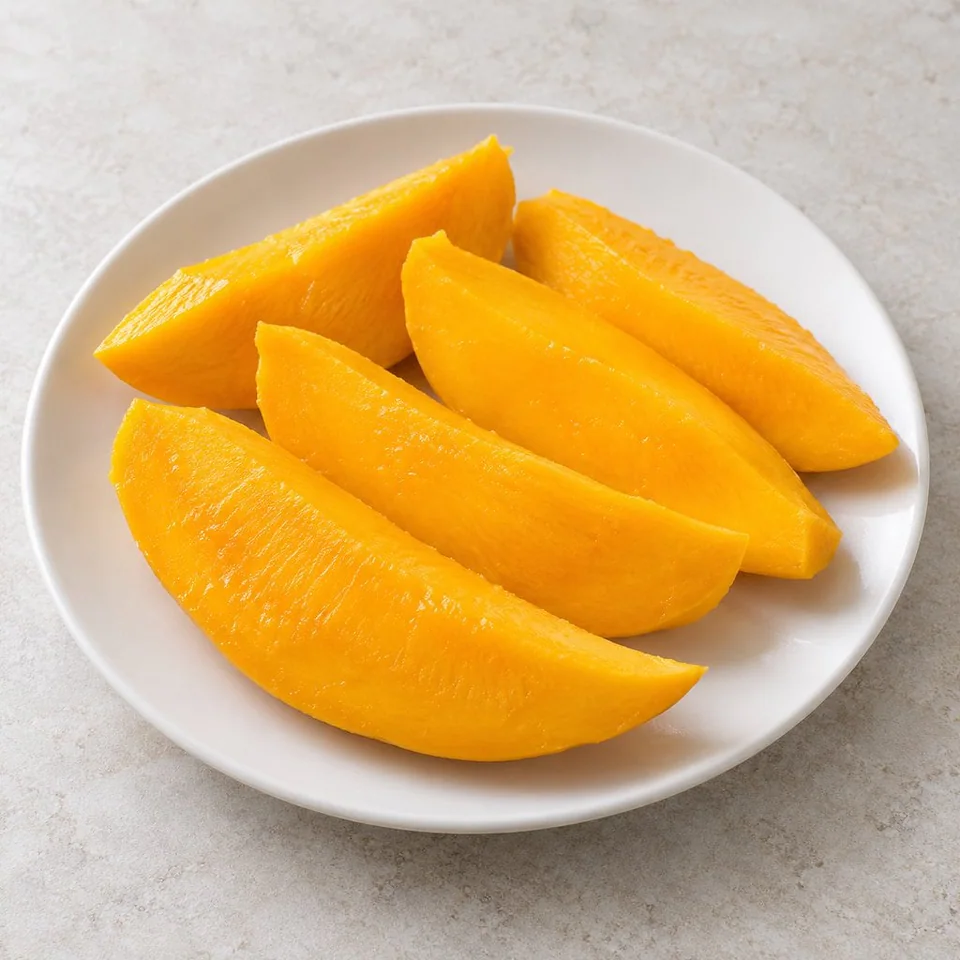
Mango is a sweet, juicy tropical fruit with golden-orange flesh and a large flat pit. Per 100 g it provides 60 calories with 15 g carbs and 1.6 g fiber.

60
kcalper 100g
Carboidrati
14.98g
Proteine
0.82g
Grassi
0.38g
Sfoglia tutti gli alimenti

Valori nutrizionali

Per 100 grammi

Valori di riferimento
Base di misurazione
Stato dell'alimento
Raw
Parte edibile
Fresh flesh, skin and pit removed
Base di misurazione
Per 100 g raw edible portion
Energia (kcal)
60 kcal
Proteine
0.82 g
Carboidrati
14.98 g
Grassi
0.38 g
Fibra alimentare
1.6 g
Zuccheri
13.66 g
Grassi saturi
0.092 g
Sodio
1 mg
Altri nutrienti24
Energia (kJ)
251 kJ
Grassi trans1
0 g
Colesterolo1
0 mg
Calcio
11 mg
Potassio
168 mg
Magnesio
10 mg
Ferro
0.16 mg
Zinco
0.09 mg
Vitamina B1
0.028 mg
Vitamina B2
0.038 mg
Vitamina B3
0.669 mg
Vitamina B5
0.197 mg
Vitamina B6
0.119 mg
Vitamina B9 (folato)
43 µg
Vitamina B121
0 µg
Vitamina C
36.4 mg
Vitamina D1
0 µg
Vitamina A (RAE)
54 µg
Retinolo1
0 µg
Beta-carotene
640 µg
Alfa-carotene
9 µg
Beta-criptoxantina
10 µg
Vitamina E (alfa-tocoferolo)
0.9 mg
Vitamina K1 (fillochinone)
4.2 µg
  1. Assunto zero dalla fonte

Fonti dei dati

2
  1. 1

    CaloriePilot curated nutrition base

    169910 · SR Legacy, April 2018 release

  2. 2

    日本文部科学省

    07132 · 日本食品標準成分表(八訂)増補2023年

Informazioni su questo alimento

Comprendere questo riferimento nutrizionale

Mango is a sweet, juicy tropical fruit with golden-orange flesh and a large flat pit. It is eaten fresh, and is also used in smoothies, salsas, desserts, and dried form.

Nutritionally, mango is mostly water and natural sugar. Per 100 g it provides about 60 kcal, 15 g of carbohydrates, 0.8 g of protein, and 0.4 g of fat, with 1.6 g of dietary fiber, 1 mg of sodium, and 11 mg of calcium.

Mango flesh is cut away from the skin and pit before eating. For accurate tracking, weigh the flesh without the skin and pit, and use the serving sizes below.

Pianifica la tua porzione

Quanto c'è nella tua porzione di Mango?

Nutrition values are reported per 100 g. A typical 1 cup of sliced mango (about 165 g) provides roughly 99 kcal. Use the serving sizes below to estimate portions when logging.

Calcolato dal riferimento per 100 g. I valori sono arrotondati.
PorzionePesoCalorieCarboidratiProteineGrassi
100 g100 g60 kcal15 g0.8 g0.4 g
1 cup sliced165 g99 kcal24.7 g1.4 g0.6 g
1/2 cup sliced82 g49.2 kcal12.3 g0.7 g0.3 g

Usa il peso della parte edibile nello stato dell'alimento mostrato sopra.

Energia (kcal)
60 kcal
Energia (kJ)
251 kJ
Proteine
0.82 g
Carboidrati
14.98 g
Grassi
0.38 g
Fibra alimentare
1.6 g
Zuccheri
13.66 g
Grassi saturi
0.092 g
Grassi trans1
0 g
Colesterolo1
0 mg
Sodio
1 mg
Calcio
11 mg
Potassio
168 mg
Magnesio
10 mg
Ferro
0.16 mg
Zinco
0.09 mg
Vitamina B1
0.028 mg
Vitamina B2
0.038 mg
Vitamina B3
0.669 mg
Vitamina B5
0.197 mg
Vitamina B6
0.119 mg
Vitamina B9 (folato)
43 µg
Vitamina B121
0 µg
Vitamina C
36.4 mg
Vitamina D1
0 µg
Vitamina A (RAE)
54 µg
Retinolo1
0 µg
Beta-carotene
640 µg
Alfa-carotene
9 µg
Beta-criptoxantina
10 µg
Vitamina E (alfa-tocoferolo)
0.9 mg
Vitamina K1 (fillochinone)
4.2 µg

Domande e risposte

Mango FAQ sulla nutrizione

How many calories are in a mango?

Mango provides about 60 calories per 100 g. A typical 1 cup of sliced mango (about 165 g) provides roughly 99 calories.

Is mango high in sugar?

Mango provides about 15 g of carbohydrates per 100 g, mostly natural sugars, making it one of the sweeter fruits.

How do you cut a mango?

Mango flesh is cut away from the large flat pit, then the skin is removed or the flesh is scored. Weigh only the edible flesh for accurate tracking.