Lebensmitteldaten können auf Englisch angezeigt werden, wenn keine Übersetzung verfügbar ist.

Adzuki BeansErnährungsreferenz
Hülsenfrüchte & Sojaprodukte

Adzuki Beans

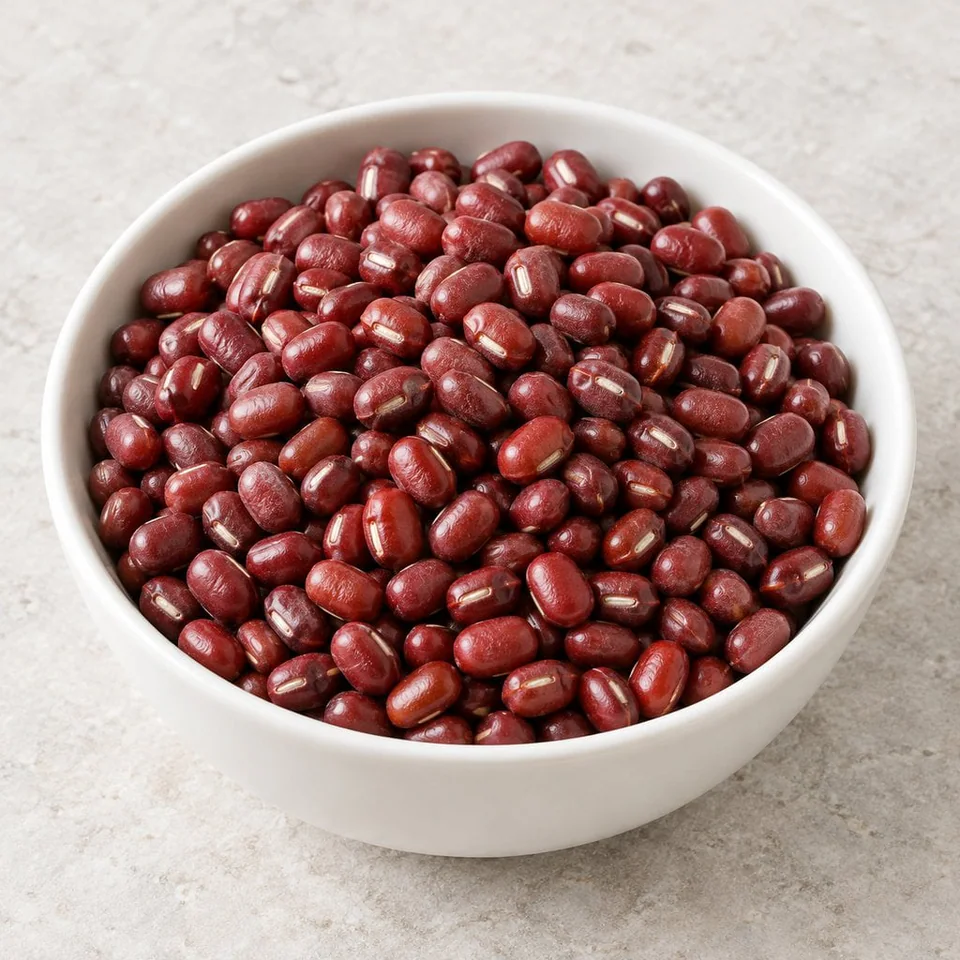
Adzuki beans are small, red legumes commonly cooked into sweet red bean paste in East Asian desserts. Per 100 g dry they provide 329 calories with 19.9 g protein and 12.7 g fiber.

329
kcalpro 100g
Kohlenhydrate
62.9g
Protein
19.87g
Fett
0.53g

Nährwertangaben

Pro 100 Gramm

Referenzwerte
Messgrundlage
Lebensmittelzustand
Dried
Essbarer Anteil
Dry mature seeds
Messgrundlage
Per 100 g dried portion
Energie (kcal)
329 kcal
Protein
19.87 g
Kohlenhydrate
62.9 g
Fett
0.53 g
Ballaststoffe
12.7 g
Gesättigte Fettsäuren
0.191 g
Natrium
5 mg
Weitere Nährstoffe19
Energie (kJ)
1376.5 kJ
Transfett1
0 g
Cholesterin
0 mg
Kalzium
66 mg
Kalium
1254 mg
Magnesium
127 mg
Eisen
4.98 mg
Zink
5.04 mg
Vitamin B1
0.455 mg
Vitamin B2
0.22 mg
Vitamin B3
2.63 mg
Vitamin B5
1.471 mg
Vitamin B6
0.351 mg
Vitamin B9 (Folat)
622 µg
Vitamin B12
0 µg
Vitamin C
0 mg
Vitamin D1
0 µg
Vitamin A (RAE)
1 µg
Retinol1
0 µg
  1. Von der Quelle als null angenommen

Datenquellen

2
  1. 1

    CaloriePilot curated nutrition base

    173727 · SR Legacy, April 2018 release

  2. 2

    日本文部科学省

    04001 · 日本食品標準成分表(八訂)増補2023年

Über dieses Lebensmittel

Diese Nährwertreferenz verstehen

Adzuki beans are small, reddish-brown legumes with a mildly sweet, nutty flavor. They are cooked whole in soups and rice dishes, and are best known in East Asian cooking for being simmered with sugar into sweet red bean paste.

Nutritionally, dry adzuki beans are high in carbohydrate and fiber with a good amount of protein. Per 100 g they provide about 329 kcal, 62.9 g of carbohydrates, 19.9 g of protein, and 0.5 g of fat, with 12.7 g of dietary fiber, 5 mg of sodium, and 66 mg of calcium.

Cooked adzuki beans absorb water and become lower in calories per 100 g. For accurate tracking, weigh them dry or cooked as prepared, and use the serving sizes below.

Plane deine Portion

Wie viel ist in Ihrer Portion von Adzuki Beans?

Nutrition values are reported per 100 g of dry beans. A typical 1/2 cup serving (about 98 g dry) provides roughly 322 kcal. Use the serving sizes below to estimate portions when logging.

Berechnet aus der Referenz pro 100 g. Werte sind gerundet.
PortionGewichtKalorienKohlenhydrateProteinFett
100 g100 g329 kcal62.9 g19.9 g0.5 g
1/2 cup dry98 g322.4 kcal61.6 g19.5 g0.5 g
1/4 cup dry49 g161.2 kcal30.8 g9.7 g0.3 g

Verwenden Sie das Gewicht des essbaren Anteils im oben gezeigten Lebensmittelzustand.

Energie (kcal)
329 kcal
Energie (kJ)
1376.5 kJ
Protein
19.87 g
Kohlenhydrate
62.9 g
Fett
0.53 g
Ballaststoffe
12.7 g
Gesättigte Fettsäuren
0.191 g
Transfett1
0 g
Cholesterin
0 mg
Natrium
5 mg
Kalzium
66 mg
Kalium
1254 mg
Magnesium
127 mg
Eisen
4.98 mg
Zink
5.04 mg
Vitamin B1
0.455 mg
Vitamin B2
0.22 mg
Vitamin B3
2.63 mg
Vitamin B5
1.471 mg
Vitamin B6
0.351 mg
Vitamin B9 (Folat)
622 µg
Vitamin B12
0 µg
Vitamin C
0 mg
Vitamin D1
0 µg
Vitamin A (RAE)
1 µg
Retinol1
0 µg

Fragen und Antworten

Adzuki Beans Ernährungs-FAQ

How many calories are in adzuki beans?

Dry adzuki beans provide about 329 calories per 100 g. A typical 1/2 cup of dry beans (about 98 g) provides roughly 322 calories.

Are adzuki beans high in fiber?

Yes. Adzuki beans provide about 12.7 g of dietary fiber per 100 g dry.

What is red bean paste?

Red bean paste is made by simmering adzuki beans with sugar and mashing them into a sweet paste, widely used in East Asian desserts.