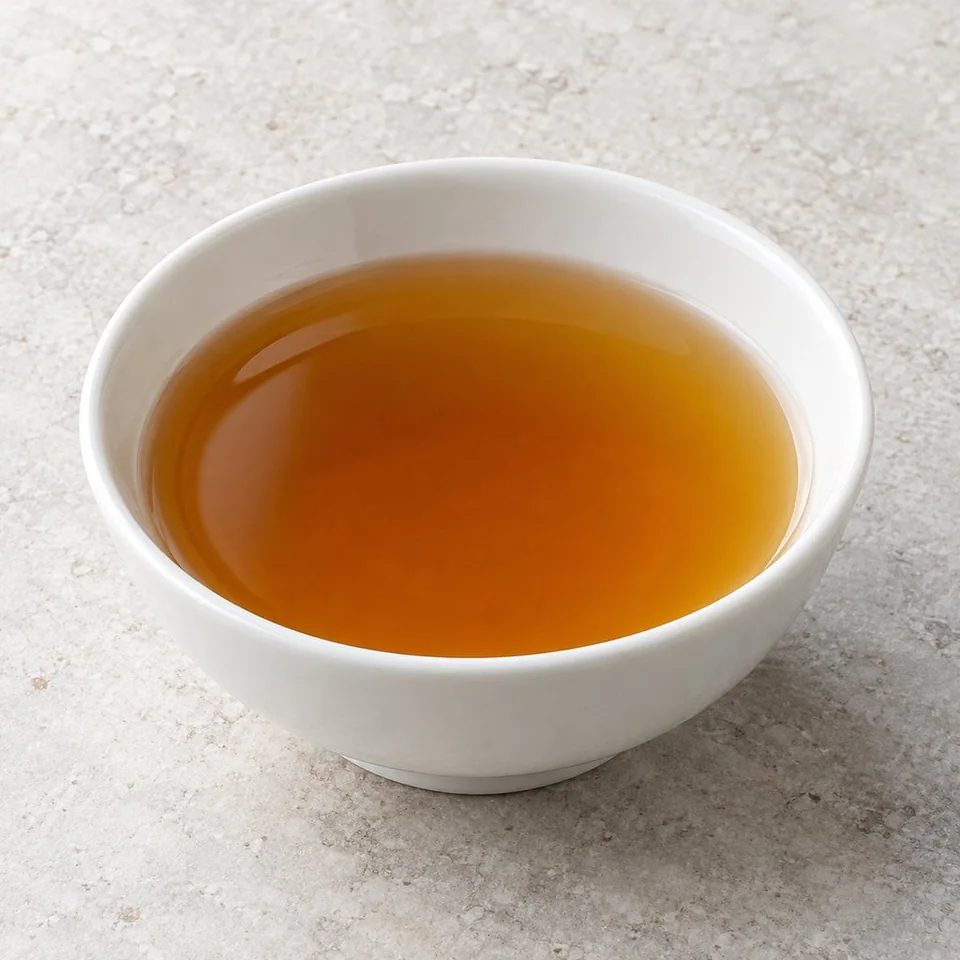
About this food
Understanding this nutrition reference
Chinese rice-based cooking wine. Existing figures are old general estimates pending a matching product label.
Plan your portion
How much is in your serving of Chinese Cooking Wine?
Nutrition is shown per100 ml. Use the amount in the food state shown. Count any ingredients you add separately.
Calculated from the per-100-ml reference. Values are rounded.| Serving | Volume | Calories | Carbs | Protein | Fat |
|---|
| 100 ml | 100 ml | 50 kcal | 6.3 g | 0.5 g | 0 g |
|---|
| 1 tbsp | 15 ml | 7.5 kcal | 0.9 g | 0.1 g | 0 g |
|---|
| 1 tsp | 5 ml | 2.5 kcal | 0.3 g | 0 g | 0 g |
|---|
Use the volume of the edible portion in the food state shown above.
- Energy (kcal)
- 50 kcal
- Energy (kJ)
- 209.2 kJ
- Protein
- 0.5 g
- Carbohydrates
- 6.3 g
- Fat
- 0 g
Questions and answers
Chinese Cooking Wine nutrition FAQ
What does this entry cover?
Chinese rice-based cooking wine. Existing figures are old general estimates pending a matching product label.
Which amount should I log?
Use the edible amount in ml in the preparation state shown.