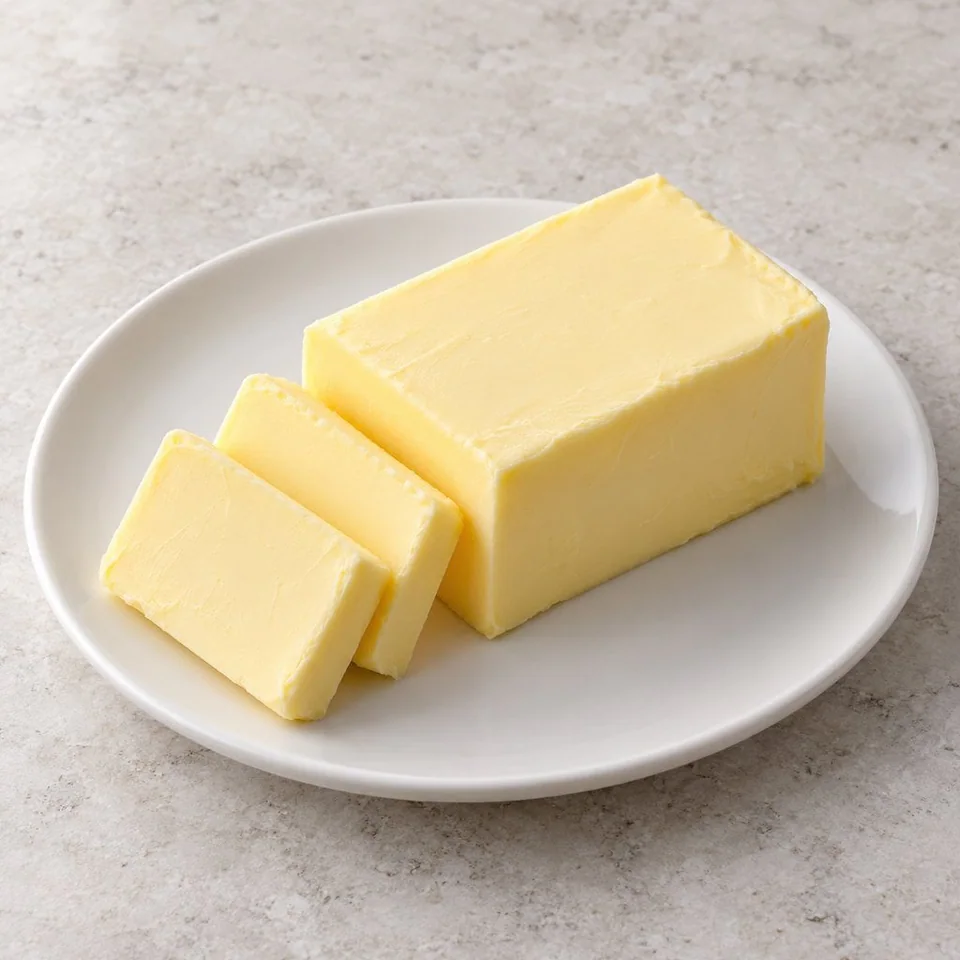
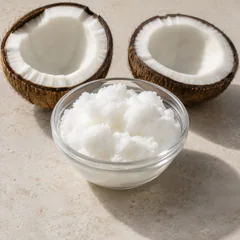
Butter is a solid dairy fat made by churning cream until it separates into butterfat and buttermilk. It is used for cooking, baking, and spreading on bread, and is salted or unsalted.
Nutritionally, butter is almost pure fat. Per 100 g it provides about 743 kcal, 0.1 g of carbohydrates, 0.9 g of protein, and 82.2 g of fat, with 524 mg of sodium and 21 mg of calcium.
Butter is very energy-dense, so small amounts add many calories. For accurate tracking, measure by the pat or spoonful, and use the serving sizes below.
Plan your portion
How much is in your serving of Butter?
Nutrition values are reported per 100 g. A typical 1 tbsp serving (about 14 g) provides roughly 104 kcal. Use the serving sizes below to estimate portions when logging.
Calculated from the per-100-g reference. Values are rounded.
Serving
Weight
Calories
Carbs
Protein
Fat
100 g
100 g
743 kcal
0.1 g
0.9 g
82.2 g
1 tbsp
14 g
104 kcal
0 g
0.1 g
11.5 g
1 tsp
5 g
37.2 kcal
0 g
0 g
4.1 g
Use the weight of the edible portion in the food state shown above.
Energy (kcal)
743 kcal
Energy (kJ)
3108.7 kJ
Protein
0.85 g
Carbohydrates
0.06 g
Fat
82.2 g
Dietary fiber
0 g
Sugars
0.58 g
Saturated fat
45.6 g
Cholesterol
235 mg
Sodium
524 mg
Calcium
21 mg
Potassium
23 mg
Magnesium
2 mg
Iron
0.06 mg
Zinc
0.07 mg
Vitamin B1
0.005 mg
Vitamin B2
0 mg
Vitamin B3
0 mg
Vitamin B6
0 mg
Vitamin B9 (folate)
5 µg
Vitamin B12
0 µg
Vitamin C
0 mg
Vitamin D
0.4 µg
Vitamin A (RAE)
758 µg
Retinol
744 µg
Beta-carotene
168 µg
Alpha-carotene
2 µg
Beta-cryptoxanthin
8 µg
Vitamin E (alpha-tocopherol)
0 mg
Vitamin K1 (phylloquinone)
7 µg
Questions and answers
Butter nutrition FAQ
How many calories are in butter?
Butter provides about 743 calories per 100 g. A typical 1 tbsp serving (about 14 g) provides roughly 104 calories.
Is butter pure fat?
Butter is almost entirely fat, providing about 82.2 g of fat per 100 g with very little protein or carbohydrate.
Is butter high in sodium?
Salted butter provides about 524 mg of sodium per 100 g. Unsalted butter contains very little sodium.