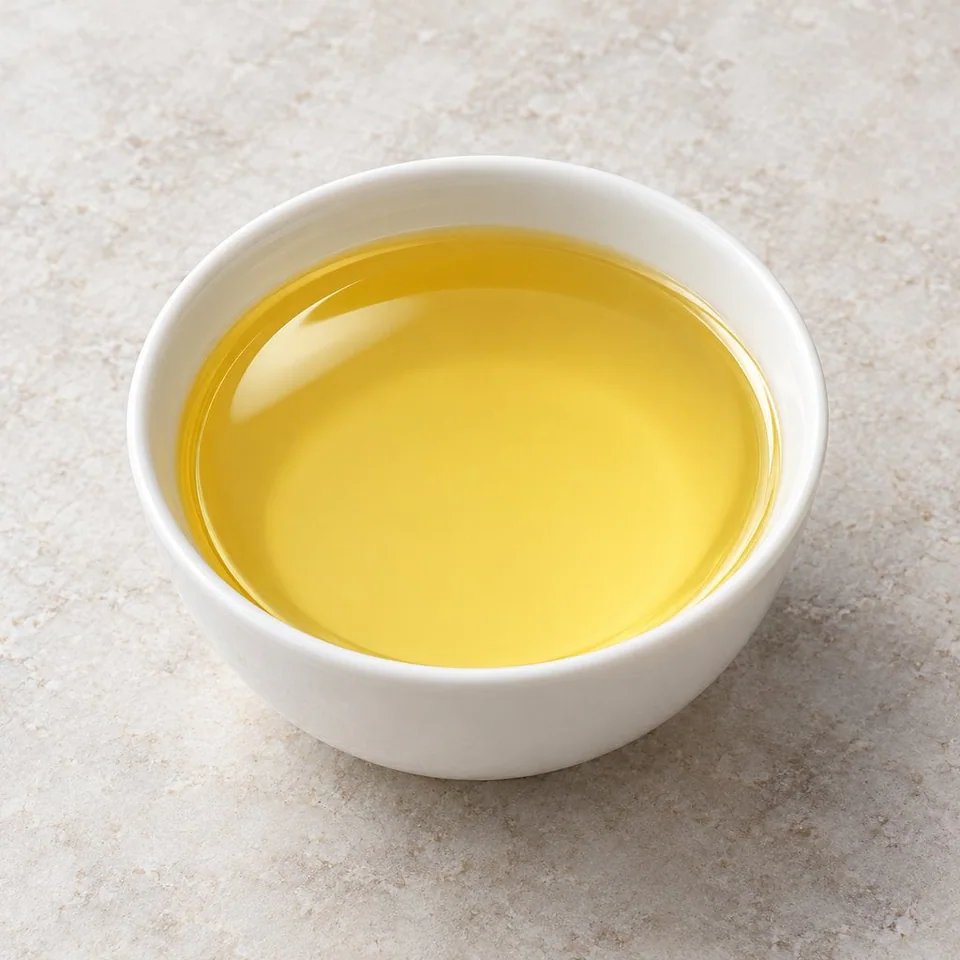
Nutrition facts
Per 100 millilitres
Measurement basis
- Food state
- A general reference for blended vegetable cooking oil
- Edible portion
- A general reference for blended vegetable cooking oil
- Measurement basis
- Per100 ml of the food as described
- Energy (kcal)1
- 852.113 kcal
- Protein
- 0 g
- Carbohydrates
- 0 g
- Fat
- 94.6793 g
- Dietary fiber
- 0 g
- Sugars
- 0 g
- Saturated fat
- 12.687 g
- Sodium
- 0 mg
More nutrients22
- Energy (kJ)1
- 3565.2 kJ
- Cholesterol
- 0 mg
- Calcium
- 0 mg
- Potassium
- 0 mg
- Magnesium
- 0 mg
- Iron
- 0.151487 mg
- Zinc
- 0 mg
- Vitamin B1
- 0 mg
- Vitamin B2
- 0 mg
- Vitamin B3
- 0 mg
- Vitamin B6
- 0 mg
- Vitamin B9 (folate)
- 0 µg
- Vitamin B12
- 0 µg
- Vitamin C
- 0 mg
- Vitamin D
- 0 µg
- Vitamin A (RAE)
- 0 µg
- Retinol
- 0 µg
- Beta-carotene
- 0 µg
- Alpha-carotene
- 0 µg
- Beta-cryptoxanthin
- 0 µg
- Vitamin E (alpha-tocopherol)
- 17.9891 mg
- Vitamin K1 (phylloquinone)
- 94.6793 µg
- Calculated energy value.