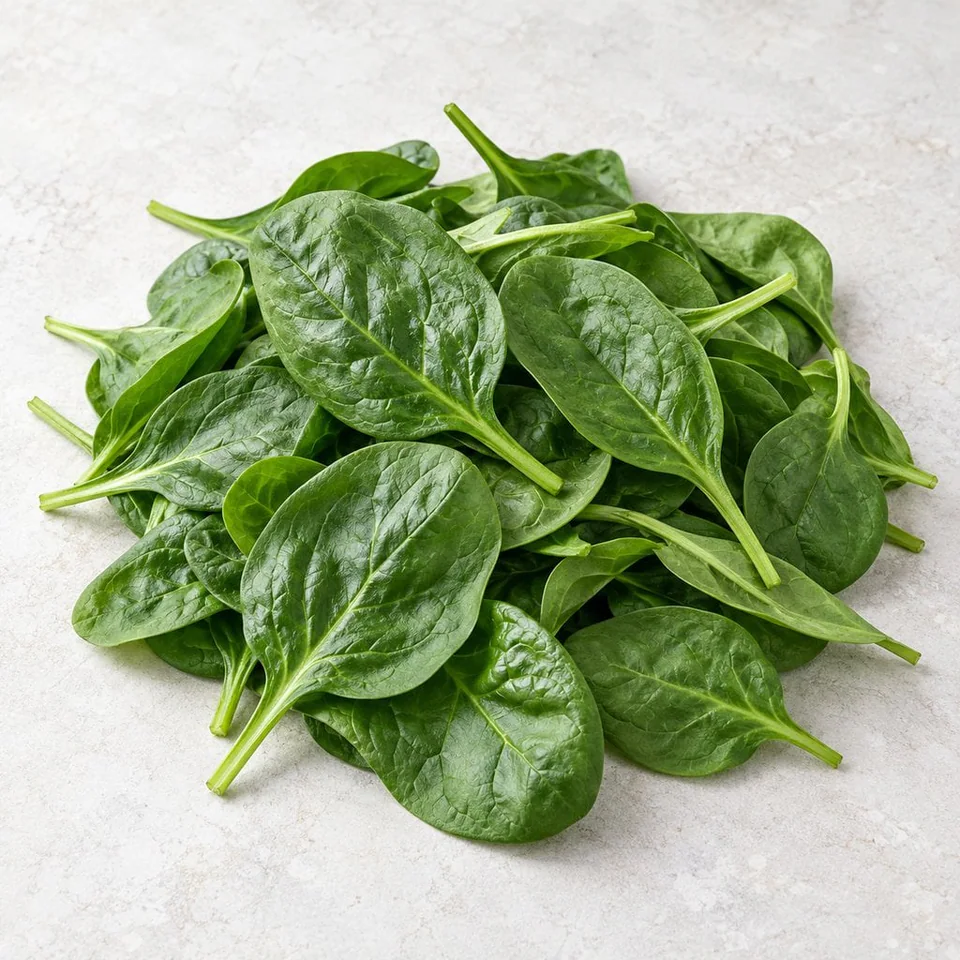
Spinach is a tender, dark-green leafy vegetable eaten raw in salads or cooked in dishes worldwide. Per 100 g it provides 27 calories with 2.9 g protein, 2.4 g carbs and 1.6 g fiber.
Spinach is a leafy green vegetable (Spinacia oleracea) with tender, slightly earthy leaves. It is eaten raw in salads and smoothies or cooked by steaming, sautéing, or wilting into soups, pasta, and casseroles. Both flat-leaf and savoy varieties are common.
Nutritionally, raw spinach is very low in calories for its weight. Per 100 g it provides about 27 kcal, 2.4 g of carbohydrates, 2.9 g of protein, and 0.6 g of fat, along with 1.6 g of dietary fiber, 111 mg of sodium, and 68 mg of calcium. Its high water content keeps its calorie density low.
Spinach shrinks considerably when cooked, so a cooked portion weighs much less than the same volume of raw leaves. For accurate tracking, weigh spinach raw before cooking or note the cooking method, and use the serving sizes below.
Plan your portion
How much is in your serving of Spinach?
Nutrition values are reported per 100 g. A typical 1 cup of raw spinach leaves (about 30 g) provides roughly 8 kcal. Use the serving sizes below to estimate portions when logging.
Calculated from the per-100-g reference. Values are rounded.
Serving
Weight
Calories
Carbs
Protein
Fat
100 g
100 g
27 kcal
2.4 g
2.9 g
0.6 g
1 cup raw leaves
30 g
8.1 kcal
0.7 g
0.9 g
0.2 g
1 cup cooked
180 g
48.6 kcal
4.3 g
5.1 g
1.1 g
Use the weight of the edible portion in the food state shown above.
Raw spinach provides about 27 calories per 100 g. A typical 1 cup of raw leaves (about 30 g) provides roughly 8 calories.
Is spinach high in protein?
Spinach provides about 2.9 g of protein per 100 g, which is high for a leafy green, though most of its weight is water. It adds protein and fiber to meals for very few calories.
Does spinach shrink when cooked?
Yes. Cooking spinach reduces its volume substantially, so a cooked portion weighs much less than the same amount of raw leaves. Weigh it by preparation method to keep logging accurate.