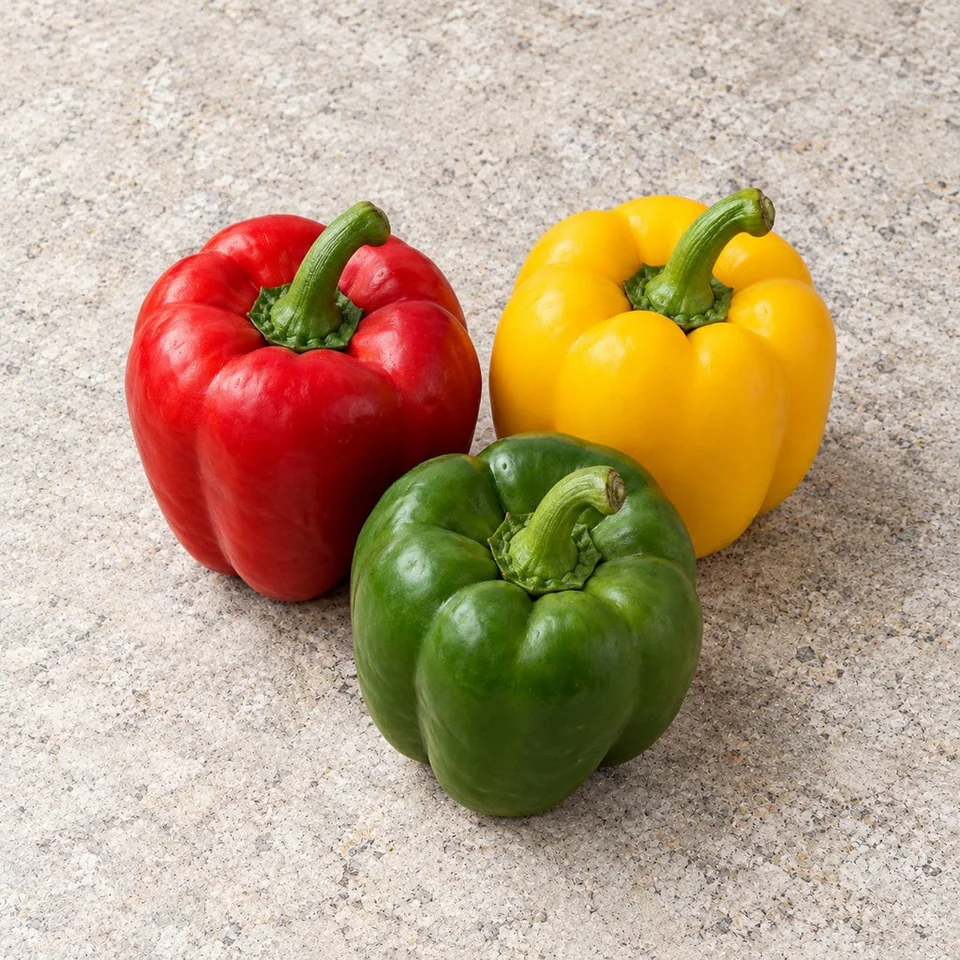
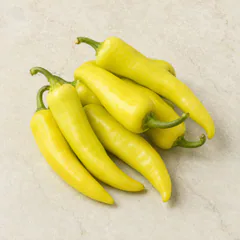
Bell peppers, also called sweet peppers, are a crisp, low-calorie vegetable rich in vitamin C. Mild and sweet rather than hot, they are enjoyed raw in salads, roasted, grilled, or stir-fried, adding color, volume, and nutrients for relatively few calories.
Bell peppers, also called sweet peppers or capsicum, are the mild members of the pepper family. Unlike hot chili peppers, they contain little to no capsaicin, giving them a crisp texture and a lightly sweet taste without heat. They come in green, red, yellow, and orange varieties, with red peppers generally the sweetest and richest in vitamin C and beta-carotene.
Nutritionally, bell peppers are very low in calories and fat while supplying dietary fiber, vitamin C, vitamin A, and several B vitamins. This makes them a popular choice for weight-management and balanced eating plans, where they add volume, color, and micronutrients for relatively few calories.
They are highly versatile in the kitchen: they can be eaten raw in salads, sliced for snacks, roasted, grilled, or stir-fried, and they serve as a common base ingredient across many cuisines.
Plan your portion
How much is in your serving of Bell Pepper?
Nutrition values refer to 100 g of raw red sweet pepper, with stem and seeds removed. USDA measures: medium pepper 119 g; chopped cup 149 g. Source energy is 111 kJ per 100 g; CaloriePilot displays 27 kcal using round(kJ / 4.184), so a 119 g pepper is approximately 32 kcal on this basis. USDA separately reports 26 kcal using its food-specific energy factors.
Calculated from the per-100-g reference. Values are rounded.
Serving
Weight
Calories
Carbs
Protein
Fat
100 g
100 g
27 kcal
6 g
1 g
0.3 g
1 medium bell pepper
119 g
32.1 kcal
7.2 g
1.2 g
0.4 g
1 cup chopped
149 g
40.2 kcal
9 g
1.5 g
0.4 g
Use the weight of the edible portion in the food state shown above.
CaloriePilot displays 27 kcal per 100 g of raw red sweet pepper, calculated from USDA’s 111 kJ using the system conversion rule. A 119 g medium pepper is approximately 32 kcal on this basis. USDA’s separately calculated energy value is 26 kcal per 100 g.
Are bell peppers good for weight loss?
Yes. Bell peppers are low in calories and fat while providing fiber and water, which help with fullness, making them a useful food in calorie-controlled meal plans.
Which color bell pepper is most nutritious?
Red bell peppers are the sweetest and generally highest in vitamin C and beta-carotene because they are fully ripened; green peppers are picked earlier and are slightly lower in these nutrients.