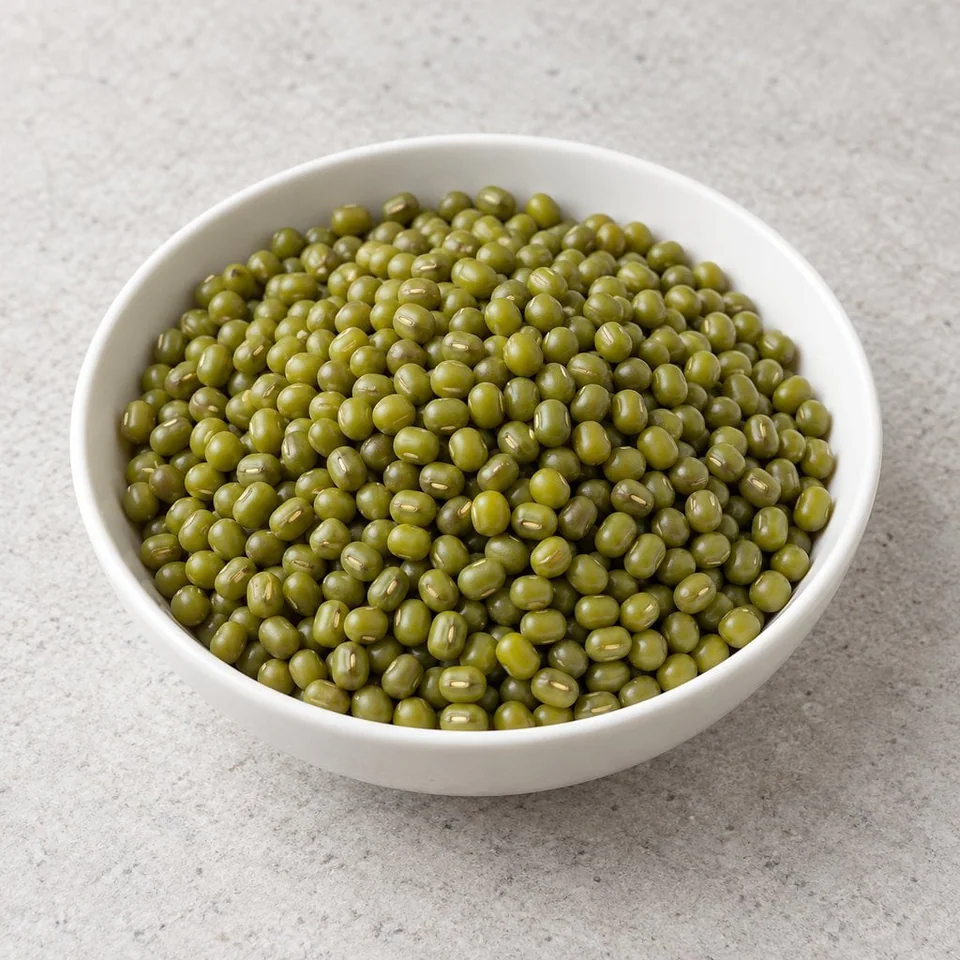
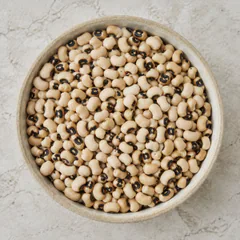
Mung beans are small, green legumes used in soups, sprouts, and desserts. Per 100 g dry they provide 347 calories with 23.9 g protein and 16.3 g fiber.
Mung beans are small, green legumes with a mild, slightly sweet flavor. They are cooked whole in soups and stews, used in sweet dessert pastes, and sprouted to make bean sprouts.
Nutritionally, dry mung beans are high in carbohydrate and fiber with a good amount of protein. Per 100 g they provide about 347 kcal, 62.6 g of carbohydrates, 23.9 g of protein, and 1.2 g of fat, with 16.3 g of dietary fiber, 15 mg of sodium, and 132 mg of calcium.
Cooked mung beans absorb water and become lower in calories per 100 g. For accurate tracking, weigh them dry or cooked as prepared, and use the serving sizes below.
Plan your portion
How much is in your serving of Mung Beans?
Nutrition values are reported per 100 g of dry beans. A typical 1/2 cup serving (about 100 g dry) provides roughly 347 kcal. Use the serving sizes below to estimate portions when logging.
Calculated from the per-100-g reference. Values are rounded.
Serving
Weight
Calories
Carbs
Protein
Fat
100 g
100 g
347 kcal
62.6 g
23.9 g
1.2 g
1/2 cup dry
100 g
347 kcal
62.6 g
23.9 g
1.2 g
1/4 cup dry
50 g
173.5 kcal
31.3 g
11.9 g
0.6 g
Use the weight of the edible portion in the food state shown above.