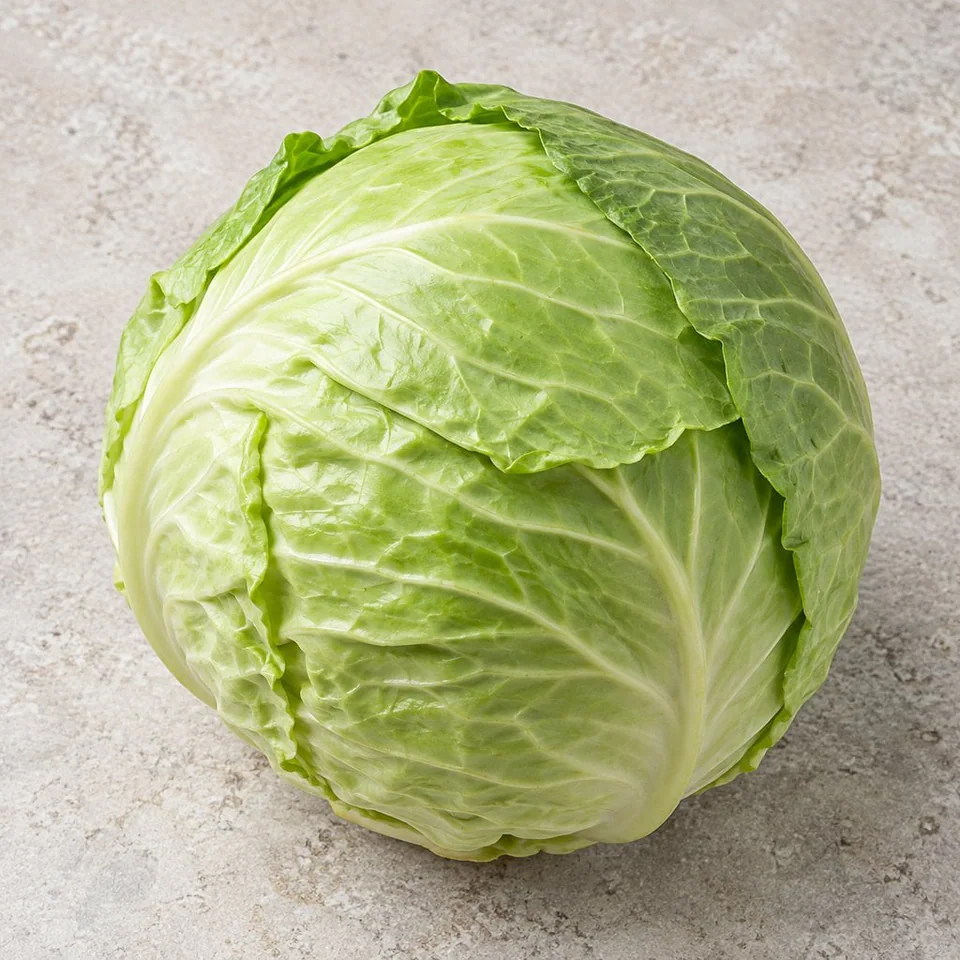
Cabbage is a low-calorie leafy vegetable from the Brassica family, with a mild flavor and crisp texture, commonly enjoyed raw in slaws, fermented as sauerkraut, or cooked in soups and stir-fries.
Cabbage is a versatile leafy vegetable from the Brassica family, related to broccoli, kale, and Brussels sprouts. Its firm, tightly packed head has a mild, slightly sweet flavor and a crisp texture that holds up well both raw and cooked. Green and red varieties are widely available, and the vegetable can be eaten raw in slaws and salads, fermented into sauerkraut or kimchi, or cooked in soups, stews, and stir-fries.
Nutritionally, cabbage is very low in calories and fat while providing dietary fiber, vitamin C, and vitamin K, along with small amounts of several B vitamins. Because it adds bulk and crunch for relatively few calories, it is a popular ingredient in balanced and calorie-conscious meal plans.
1회 제공량 계획
1회 제공량에 얼마나 들어 있나요? Cabbage?
Nutrition values are reported per 100 g of raw edible cabbage. A typical 1-cup serving of chopped cabbage weighs about 89 g and provides roughly 22 kcal, while 1 cup shredded weighs about 70 g. Use the serving sizes below to estimate portions when logging.
A 100 g serving of raw cabbage has about 25 kcal. One cup of chopped cabbage (about 89 g) provides roughly 22 kcal.
Is cabbage good for weight loss?
Yes. Cabbage is very low in calories and fat while providing fiber and water, which can help with fullness, making it a useful food in calorie-controlled meal plans.
Is raw or cooked cabbage more nutritious?
Both are nutritious. Raw cabbage retains more vitamin C, while cooking makes some nutrients more digestible; a mix of raw and cooked cabbage is a practical way to get its benefits.