Alaska pollock is a mild, lean white fish from the North Pacific, widely used for fillets, fish sticks, and surimi; it is low in fat and a good source of protein.
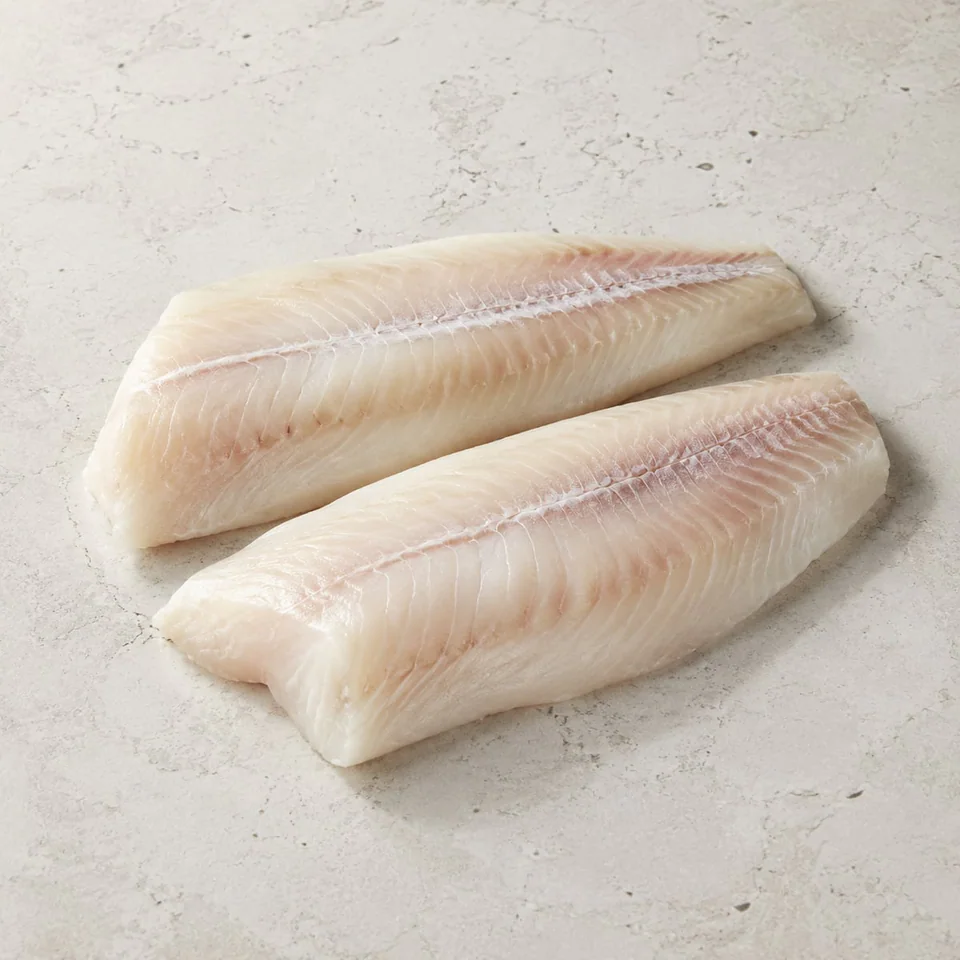
Alaska pollock is a mild-flavored white fish from the North Pacific and a member of the cod family. Its lean, flaky flesh has a light taste and firm texture, making it one of the most widely used fish in commercial seafood products, including frozen fillets, fish sticks, and surimi (imitation crab).
Nutritionally, Alaska pollock is low in fat and rich in protein, with relatively few calories per serving. It also supplies B vitamins and minerals such as phosphorus and selenium. Its neutral flavor and lean profile make it a practical choice for high-protein, lower-calorie meals.
Plan your portion
How much is in your serving of Alaska Pollock?
Nutrition values are reported per 100 g of raw edible Alaska pollock. The existing 113 g (about 4 oz) fillet serving provides roughly 88 kcal, calculated from 78 kcal per 100 g. Use weighed edible portions when logging.
Calculated from the per-100-g reference. Values are rounded.
Serving
Weight
Calories
Carbs
Protein
Fat
100 g
100 g
78 kcal
0.1 g
17.3 g
1 g
1 fillet (4 oz)
113 g
88.1 kcal
0.1 g
19.6 g
1.1 g
Use the weight of the edible portion in the food state shown above.
Yes. A 100 g serving of raw Alaska pollock provides about 17 g of protein with only about 1 g of fat.
Is Alaska pollock good for weight loss?
Yes. It is lean and relatively low in calories while being high in protein, which supports fullness, making it a useful fish in calorie-controlled meal plans.
What is Alaska pollock used for?
Alaska pollock is widely used in frozen fillets, fish sticks, and surimi (imitation crab), thanks to its mild flavor and firm, flaky texture.