Os dados de alimentos podem ser exibidos em inglês quando uma tradução não estiver disponível.

DuckReferência nutricional
Carnes, ovos e laticínios

Duck

Duck is a rich, flavorful poultry with darker meat and more fat than chicken. Per 100 g it provides 240 calories with 15.5 g protein and 19.7 g fat.

240
kcalpor 100g
Carboidratos
0.2g
Proteína
15.5g
Gordura
19.7g
Navegar por todos os alimentos

Informação nutricional

Por 100 gramas

Valores de referência
Base de medição
Estado do alimento
Raw
Porção comestível
Meat, with skin
Base de medição
Per 100 g raw edible portion
Energia (kcal)
240 kcal
Proteína
15.5 g
Carboidratos
0.2 g
Gordura
19.7 g
Fibra alimentar1
0 g
Açúcares1
0 g
Gordura saturada
13.22 g
Sódio
63 mg
Mais nutrientes23
Energia (kJ)
1004.2 kJ
Colesterol
76 mg
Cálcio
11 mg
Potássio
209 mg
Magnésio
15 mg
Ferro
2.4 mg
Zinco
1.36 mg
Vitamina B1
0.197 mg
Vitamina B2
0.21 mg
Vitamina B3
3.934 mg
Vitamina B5
0.951 mg
Vitamina B6
0.19 mg
Vitamina B9 (folato)
13 µg
Vitamina B12
0.25 µg
Vitamina C
2.8 mg
Vitamina D
0.7 µg
Vitamina A (RAE)
50 µg
Retinol
50 µg
Betacaroteno1
0 µg
Alfa-caroteno1
0 µg
Beta-criptoxantina1
0 µg
Vitamina E (alfa-tocoferol)
0.7 mg
Vitamina K1 (filoquinona)
5.5 µg
  1. Assumido zero pela fonte

Fontes de dados

4
  1. 1

    CaloriePilot curated nutrition base

  2. 2

    United States Department of Agriculture, Agricultural Research Service

    172408 · SR Legacy, April 2018 release

  3. 3

    United States Department of Agriculture, Agricultural Research Service

    172410 · SR Legacy, April 2018 release

  4. 4

    日本文部科学省

    11206 · 日本食品標準成分表(八訂)増補2023年

Sobre este alimento

Entendendo esta referência nutricional

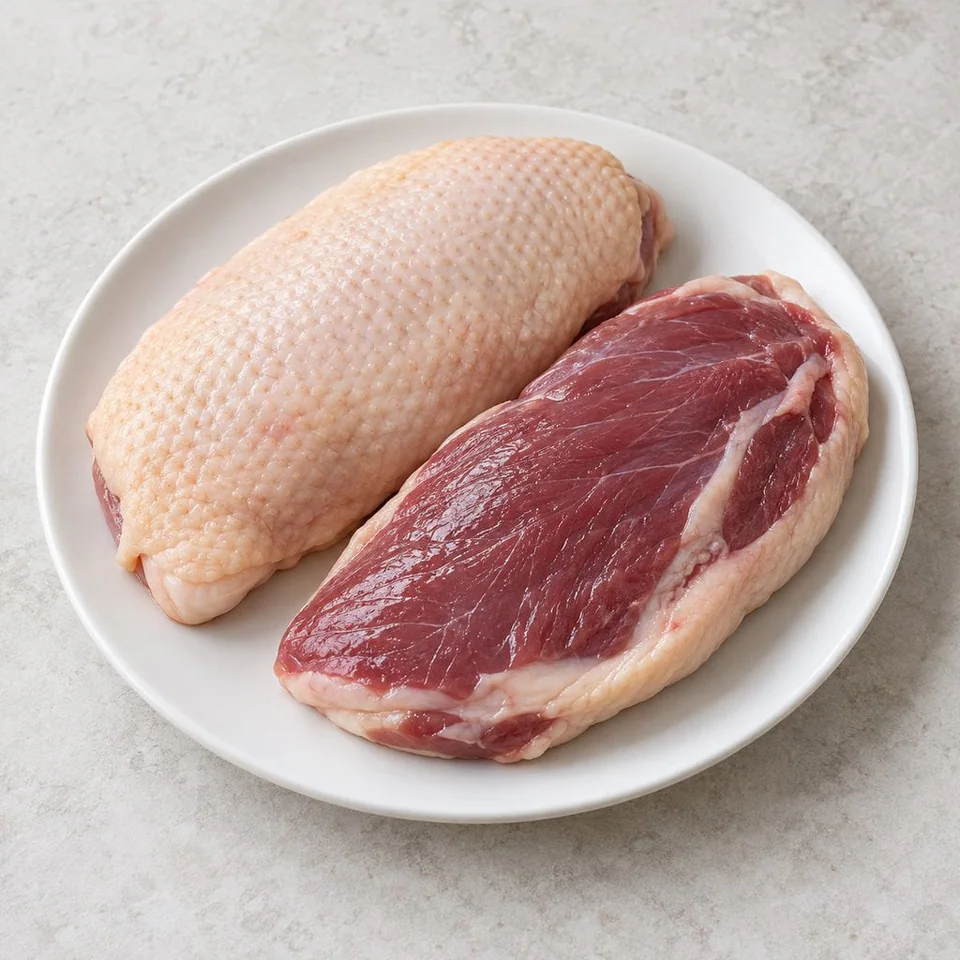
Duck is a waterfowl poultry with dark, rich meat and a thick layer of fat beneath the skin. It is roasted, braised, grilled, or confit, and is common in both Western and Chinese cooking.

Nutritionally, duck is higher in fat than chicken, which makes it more calorie-dense. Per 100 g it provides about 240 kcal, 15.5 g of protein, 19.7 g of fat, and 0.2 g of carbohydrates. This reference reflects duck meat with skin.

Removing the skin reduces the fat and calorie content significantly. For accurate tracking, weigh duck with or without skin as consumed and account for the cooking method, and use the serving sizes below.

Planeje sua porção

Quanto há na sua porção de Duck?

Nutrition values are reported per 100 g. A typical 3 oz serving (about 85 g) provides roughly 204 kcal. Use the serving sizes below to estimate portions when logging.

Calculado a partir da referência por 100 g. Os valores são arredondados.
PorçãoPesoCaloriasCarboidratosProteínaGordura
100 g100 g240 kcal0.2 g15.5 g19.7 g
3 oz85 g204 kcal0.2 g13.2 g16.7 g
1 cup chopped140 g336 kcal0.3 g21.7 g27.6 g

Use o peso da porção comestível no estado do alimento mostrado acima.

Energia (kcal)
240 kcal
Energia (kJ)
1004.2 kJ
Proteína
15.5 g
Carboidratos
0.2 g
Gordura
19.7 g
Fibra alimentar1
0 g
Açúcares1
0 g
Gordura saturada
13.22 g
Colesterol
76 mg
Sódio
63 mg
Cálcio
11 mg
Potássio
209 mg
Magnésio
15 mg
Ferro
2.4 mg
Zinco
1.36 mg
Vitamina B1
0.197 mg
Vitamina B2
0.21 mg
Vitamina B3
3.934 mg
Vitamina B5
0.951 mg
Vitamina B6
0.19 mg
Vitamina B9 (folato)
13 µg
Vitamina B12
0.25 µg
Vitamina C
2.8 mg
Vitamina D
0.7 µg
Vitamina A (RAE)
50 µg
Retinol
50 µg
Betacaroteno1
0 µg
Alfa-caroteno1
0 µg
Beta-criptoxantina1
0 µg
Vitamina E (alfa-tocoferol)
0.7 mg
Vitamina K1 (filoquinona)
5.5 µg

Perguntas e respostas

Duck FAQ de nutrição

How many calories are in duck?

Duck meat with skin provides about 240 calories per 100 g. A typical 3 oz serving (about 85 g) provides roughly 204 calories.

Is duck higher in fat than chicken?

Yes. Duck has more fat than chicken, especially with the skin on. Per 100 g it provides about 19.7 g of fat.

Should I eat duck with or without skin?

Duck skin contains much of the fat. Removing the skin lowers the fat and calorie content significantly.