I dati sugli alimenti possono essere mostrati in inglese quando una traduzione non è disponibile.

DuckRiferimento nutrizionale
Carne, uova e latticini

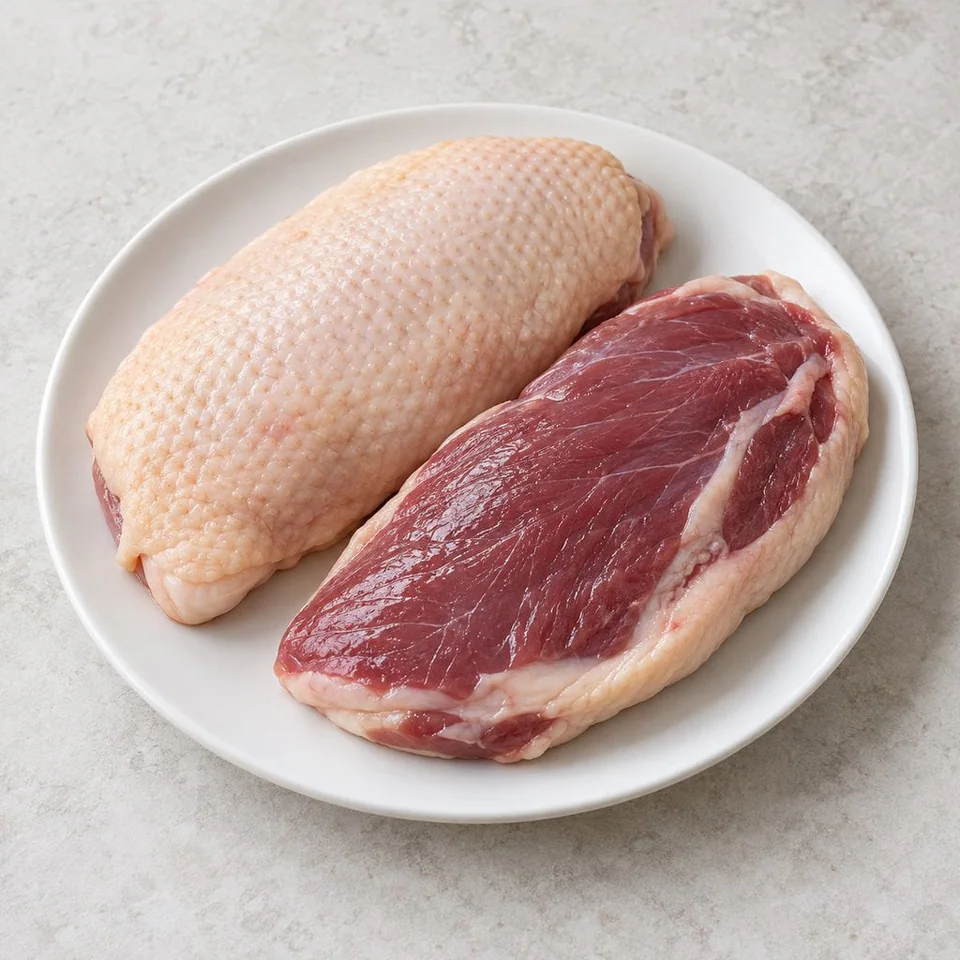
Duck

Duck is a rich, flavorful poultry with darker meat and more fat than chicken. Per 100 g it provides 240 calories with 15.5 g protein and 19.7 g fat.

240
kcalper 100g
Carboidrati
0.2g
Proteine
15.5g
Grassi
19.7g
Sfoglia tutti gli alimenti

Valori nutrizionali

Per 100 grammi

Valori di riferimento
Base di misurazione
Stato dell'alimento
Raw
Parte edibile
Meat, with skin
Base di misurazione
Per 100 g raw edible portion
Energia (kcal)
240 kcal
Proteine
15.5 g
Carboidrati
0.2 g
Grassi
19.7 g
Fibra alimentare1
0 g
Zuccheri1
0 g
Grassi saturi
13.22 g
Sodio
63 mg
Altri nutrienti23
Energia (kJ)
1004.2 kJ
Colesterolo
76 mg
Calcio
11 mg
Potassio
209 mg
Magnesio
15 mg
Ferro
2.4 mg
Zinco
1.36 mg
Vitamina B1
0.197 mg
Vitamina B2
0.21 mg
Vitamina B3
3.934 mg
Vitamina B5
0.951 mg
Vitamina B6
0.19 mg
Vitamina B9 (folato)
13 µg
Vitamina B12
0.25 µg
Vitamina C
2.8 mg
Vitamina D
0.7 µg
Vitamina A (RAE)
50 µg
Retinolo
50 µg
Beta-carotene1
0 µg
Alfa-carotene1
0 µg
Beta-criptoxantina1
0 µg
Vitamina E (alfa-tocoferolo)
0.7 mg
Vitamina K1 (fillochinone)
5.5 µg
  1. Assunto zero dalla fonte

Fonti dei dati

4
  1. 1

    CaloriePilot curated nutrition base

  2. 2

    United States Department of Agriculture, Agricultural Research Service

    172408 · SR Legacy, April 2018 release

  3. 3

    United States Department of Agriculture, Agricultural Research Service

    172410 · SR Legacy, April 2018 release

  4. 4

    日本文部科学省

    11206 · 日本食品標準成分表(八訂)増補2023年

Informazioni su questo alimento

Comprendere questo riferimento nutrizionale

Duck is a waterfowl poultry with dark, rich meat and a thick layer of fat beneath the skin. It is roasted, braised, grilled, or confit, and is common in both Western and Chinese cooking.

Nutritionally, duck is higher in fat than chicken, which makes it more calorie-dense. Per 100 g it provides about 240 kcal, 15.5 g of protein, 19.7 g of fat, and 0.2 g of carbohydrates. This reference reflects duck meat with skin.

Removing the skin reduces the fat and calorie content significantly. For accurate tracking, weigh duck with or without skin as consumed and account for the cooking method, and use the serving sizes below.

Pianifica la tua porzione

Quanto c'è nella tua porzione di Duck?

Nutrition values are reported per 100 g. A typical 3 oz serving (about 85 g) provides roughly 204 kcal. Use the serving sizes below to estimate portions when logging.

Calcolato dal riferimento per 100 g. I valori sono arrotondati.
PorzionePesoCalorieCarboidratiProteineGrassi
100 g100 g240 kcal0.2 g15.5 g19.7 g
3 oz85 g204 kcal0.2 g13.2 g16.7 g
1 cup chopped140 g336 kcal0.3 g21.7 g27.6 g

Usa il peso della parte edibile nello stato dell'alimento mostrato sopra.

Energia (kcal)
240 kcal
Energia (kJ)
1004.2 kJ
Proteine
15.5 g
Carboidrati
0.2 g
Grassi
19.7 g
Fibra alimentare1
0 g
Zuccheri1
0 g
Grassi saturi
13.22 g
Colesterolo
76 mg
Sodio
63 mg
Calcio
11 mg
Potassio
209 mg
Magnesio
15 mg
Ferro
2.4 mg
Zinco
1.36 mg
Vitamina B1
0.197 mg
Vitamina B2
0.21 mg
Vitamina B3
3.934 mg
Vitamina B5
0.951 mg
Vitamina B6
0.19 mg
Vitamina B9 (folato)
13 µg
Vitamina B12
0.25 µg
Vitamina C
2.8 mg
Vitamina D
0.7 µg
Vitamina A (RAE)
50 µg
Retinolo
50 µg
Beta-carotene1
0 µg
Alfa-carotene1
0 µg
Beta-criptoxantina1
0 µg
Vitamina E (alfa-tocoferolo)
0.7 mg
Vitamina K1 (fillochinone)
5.5 µg

Domande e risposte

Duck FAQ sulla nutrizione

How many calories are in duck?

Duck meat with skin provides about 240 calories per 100 g. A typical 3 oz serving (about 85 g) provides roughly 204 calories.

Is duck higher in fat than chicken?

Yes. Duck has more fat than chicken, especially with the skin on. Per 100 g it provides about 19.7 g of fat.

Should I eat duck with or without skin?

Duck skin contains much of the fat. Removing the skin lowers the fat and calorie content significantly.