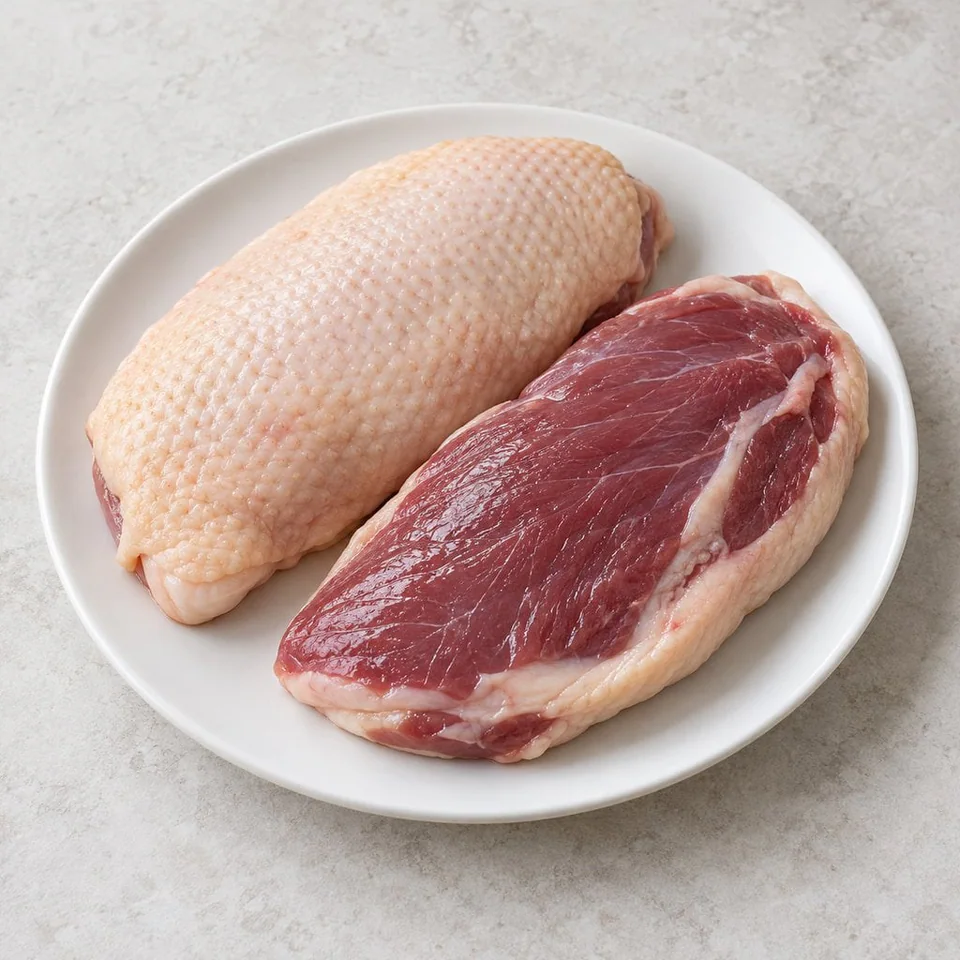
Duck is a waterfowl poultry with dark, rich meat and a thick layer of fat beneath the skin. It is roasted, braised, grilled, or confit, and is common in both Western and Chinese cooking.
Nutritionally, duck is higher in fat than chicken, which makes it more calorie-dense. Per 100 g it provides about 240 kcal, 15.5 g of protein, 19.7 g of fat, and 0.2 g of carbohydrates. This reference reflects duck meat with skin.
Removing the skin reduces the fat and calorie content significantly. For accurate tracking, weigh duck with or without skin as consumed and account for the cooking method, and use the serving sizes below.
Plan your portion
How much is in your serving of Duck?
Nutrition values are reported per 100 g. A typical 3 oz serving (about 85 g) provides roughly 204 kcal. Use the serving sizes below to estimate portions when logging.
Calculated from the per-100-g reference. Values are rounded.
Serving
Weight
Calories
Carbs
Protein
Fat
100 g
100 g
240 kcal
0.2 g
15.5 g
19.7 g
3 oz
85 g
204 kcal
0.2 g
13.2 g
16.7 g
1 cup chopped
140 g
336 kcal
0.3 g
21.7 g
27.6 g
Use the weight of the edible portion in the food state shown above.