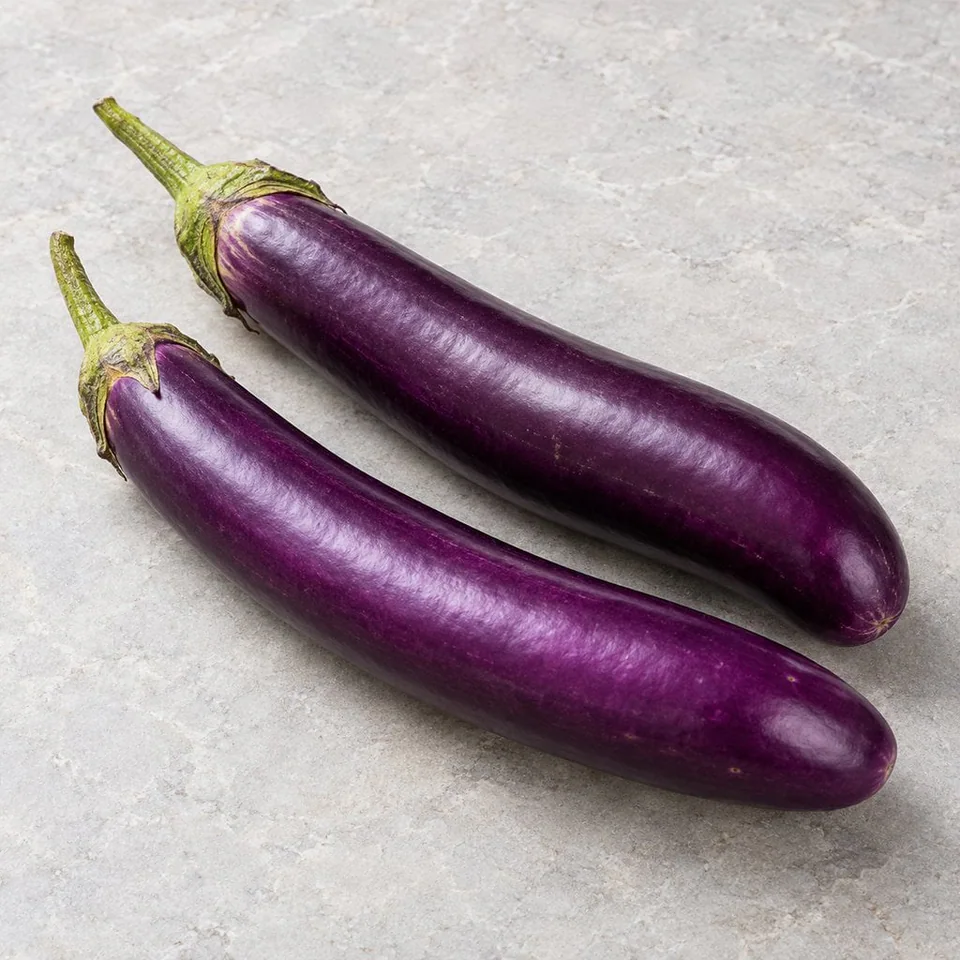
Eggplant, also called aubergine, is a glossy, deep-purple vegetable with soft, spongy flesh. It is rarely eaten raw and is usually roasted, grilled, fried, or stewed, and is a key ingredient in dishes such as ratatouille and baba ghanoush.
Nutritionally, eggplant is low in calories and mostly water. Per 100 g it provides about 25 kcal, 5.9 g of carbohydrates, 1 g of protein, and 0.2 g of fat, with 3 g of dietary fiber, 2 mg of sodium, and 9 mg of calcium.
Eggplant absorbs oil readily when fried, which can add many calories to a dish. For accurate tracking, weigh the eggplant as prepared and note the cooking method, and use the serving sizes below.
Plan your portion
How much is in your serving of Eggplant?
Nutrition values are reported per 100 g. A typical 1 cup of cubed eggplant (about 82 g) provides roughly 21 kcal. Use the serving sizes below to estimate portions when logging.
Calculated from the per-100-g reference. Values are rounded.
Serving
Weight
Calories
Carbs
Protein
Fat
100 g
100 g
25 kcal
5.9 g
1 g
0.2 g
1 cup cubed
82 g
20.5 kcal
4.8 g
0.8 g
0.1 g
3 oz
85 g
21.3 kcal
5 g
0.8 g
0.2 g
Use the weight of the edible portion in the food state shown above.