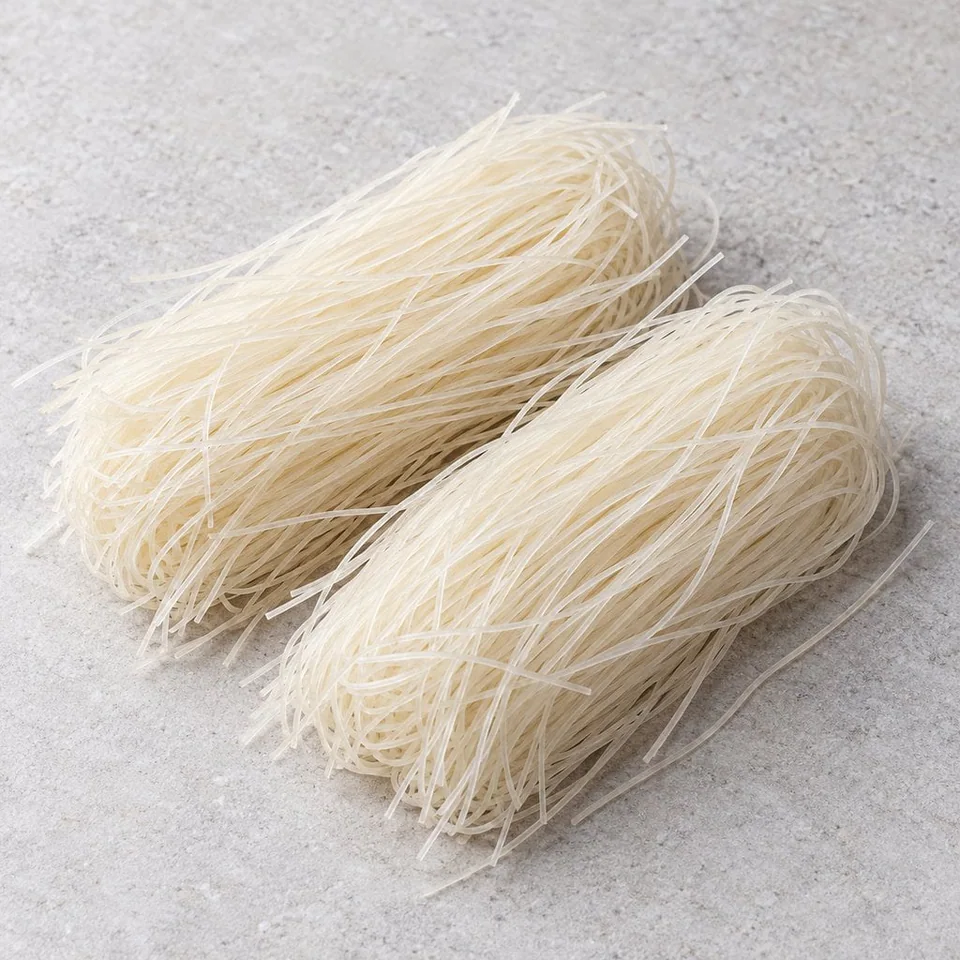
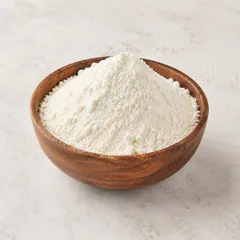
Rice noodles are thin strands made from rice flour and water, sold dry and boiled until tender. Per 100 g dry they provide 364 calories with 80.2 g carbs and 6 g protein.
Rice noodles are thin, translucent strands made from rice flour and water, then dried. They are a staple in Southeast and East Asian cooking, used in soups, stir-fries, and salads after being soaked or boiled until tender.
Nutritionally, dry rice noodles are almost entirely carbohydrate. Per 100 g they provide about 364 kcal, 80.2 g of carbohydrates, 6 g of protein, and 0.6 g of fat, with 1.6 g of dietary fiber, 182 mg of sodium, and 18 mg of calcium.
Rice noodles absorb a lot of water when cooked, so a cooked portion weighs much more than the same amount of dry noodles. For accurate tracking, weigh dry noodles before cooking or cooked noodles as served, and use the serving sizes below.
Plan your portion
How much is in your serving of Rice Noodles?
Nutrition values are reported per 100 g of dry noodles. A typical 2 oz serving (about 57 g dry) provides roughly 207 kcal. Use the serving sizes below to estimate portions when logging.
Calculated from the per-100-g reference. Values are rounded.
Serving
Weight
Calories
Carbs
Protein
Fat
100 g
100 g
364 kcal
80.2 g
6 g
0.6 g
2 oz dry
57 g
207.5 kcal
45.7 g
3.4 g
0.3 g
1 oz dry
28 g
101.9 kcal
22.5 g
1.7 g
0.2 g
Use the weight of the edible portion in the food state shown above.
Dry rice noodles provide about 364 calories per 100 g. A typical 2 oz serving (about 57 g dry) provides roughly 207 calories.
Do rice noodles gain weight when cooked?
Yes. Rice noodles absorb water when soaked or boiled, so a cooked portion weighs more than the same amount of dry noodles. Track by dry weight before cooking.
Are rice noodles gluten-free?
Rice noodles are made from rice flour and water, so they are naturally gluten-free, though cross-contamination can occur depending on processing.