WatermelonNutrition reference
Fruit

Watermelon

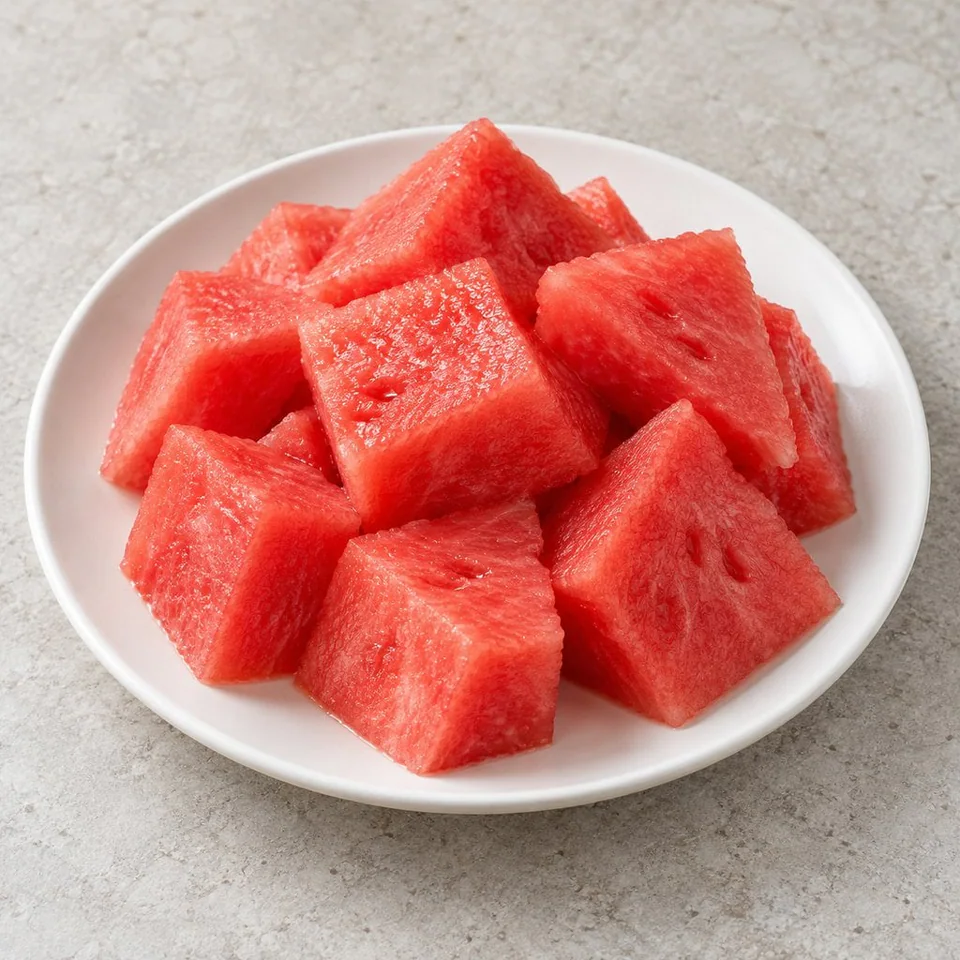
Watermelon is a large, refreshing melon with juicy red flesh and high water content, eaten chilled. Per 100 g it provides 30 calories with 7.6 g carbs.

30
kcalper 100g
Carbs
7.55g
Protein
0.61g
Fat
0.15g
Browse all foods

Nutrition facts

Per 100 grams

Reference values
Measurement basis
Food state
Raw
Edible portion
Fresh flesh, seeds removed
Measurement basis
Per 100 g raw edible portion
Energy (kcal)
30 kcal
Protein
0.61 g
Carbohydrates
7.55 g
Fat
0.15 g
Dietary fiber
0.4 g
Sugars
6.2 g
Saturated fat
0.016 g
Sodium
1 mg
More nutrients23
Energy (kJ)
125.5 kJ
Trans fat1
0 g
Cholesterol1
0 mg
Calcium
7 mg
Potassium
112 mg
Magnesium
10 mg
Iron
0.24 mg
Zinc
0.1 mg
Vitamin B1
0.033 mg
Vitamin B2
0.021 mg
Vitamin B3
0.178 mg
Vitamin B5
0.221 mg
Vitamin B6
0.045 mg
Vitamin B9 (folate)
3 µg
Vitamin B121
0 µg
Vitamin C
8.1 mg
Vitamin D1
0 µg
Vitamin A (RAE)
28 µg
Retinol1
0 µg
Beta-carotene
303 µg
Beta-cryptoxanthin
78 µg
Vitamin E (alpha-tocopherol)
0.05 mg
Vitamin K1 (phylloquinone)
0.1 µg
  1. Assumed zero by source

Data sources

2
  1. 1

    CaloriePilot curated nutrition base

    167765 · SR Legacy, April 2018 release

  2. 2

    日本文部科学省

    07077 · 日本食品標準成分表(八訂)増補2023年

About this food

Understanding this nutrition reference

Watermelon is a large, refreshing melon with crisp, juicy red flesh and a high water content. It is usually eaten chilled in slices or cubes, and is a popular summer fruit.

Nutritionally, watermelon is mostly water and natural sugar. Per 100 g it provides about 30 kcal, 7.6 g of carbohydrates, 0.6 g of protein, and 0.2 g of fat, with 0.4 g of dietary fiber, 1 mg of sodium, and 7 mg of calcium.

Because watermelon is so watery, a large volume contributes relatively few calories. For accurate tracking, weigh the flesh without the rind, and use the serving sizes below.

Plan your portion

How much is in your serving of Watermelon?

Nutrition values are reported per 100 g. A typical 1 cup of diced watermelon (about 152 g) provides roughly 46 kcal. Use the serving sizes below to estimate portions when logging.

Calculated from the per-100-g reference. Values are rounded.
ServingWeightCaloriesCarbsProteinFat
100 g100 g30 kcal7.6 g0.6 g0.2 g
1 cup diced152 g45.6 kcal11.5 g0.9 g0.2 g
1/2 cup diced76 g22.8 kcal5.7 g0.5 g0.1 g

Use the weight of the edible portion in the food state shown above.

Energy (kcal)
30 kcal
Energy (kJ)
125.5 kJ
Protein
0.61 g
Carbohydrates
7.55 g
Fat
0.15 g
Dietary fiber
0.4 g
Sugars
6.2 g
Saturated fat
0.016 g
Trans fat1
0 g
Cholesterol1
0 mg
Sodium
1 mg
Calcium
7 mg
Potassium
112 mg
Magnesium
10 mg
Iron
0.24 mg
Zinc
0.1 mg
Vitamin B1
0.033 mg
Vitamin B2
0.021 mg
Vitamin B3
0.178 mg
Vitamin B5
0.221 mg
Vitamin B6
0.045 mg
Vitamin B9 (folate)
3 µg
Vitamin B121
0 µg
Vitamin C
8.1 mg
Vitamin D1
0 µg
Vitamin A (RAE)
28 µg
Retinol1
0 µg
Beta-carotene
303 µg
Beta-cryptoxanthin
78 µg
Vitamin E (alpha-tocopherol)
0.05 mg
Vitamin K1 (phylloquinone)
0.1 µg

Questions and answers

Watermelon nutrition FAQ

How many calories are in watermelon?

Watermelon provides about 30 calories per 100 g. A typical 1 cup of diced watermelon (about 152 g) provides roughly 46 calories.

Is watermelon mostly water?

Yes. Watermelon is about 90% water, which is why it is so low in calories and so refreshing.

Is watermelon high in sugar?

Watermelon provides about 7.6 g of carbohydrates per 100 g, mostly natural sugars, but its high water content keeps its calorie density low.