I dati sugli alimenti possono essere mostrati in inglese quando una traduzione non è disponibile.

KelpRiferimento nutrizionale
Pesce e frutti di mare

Kelp

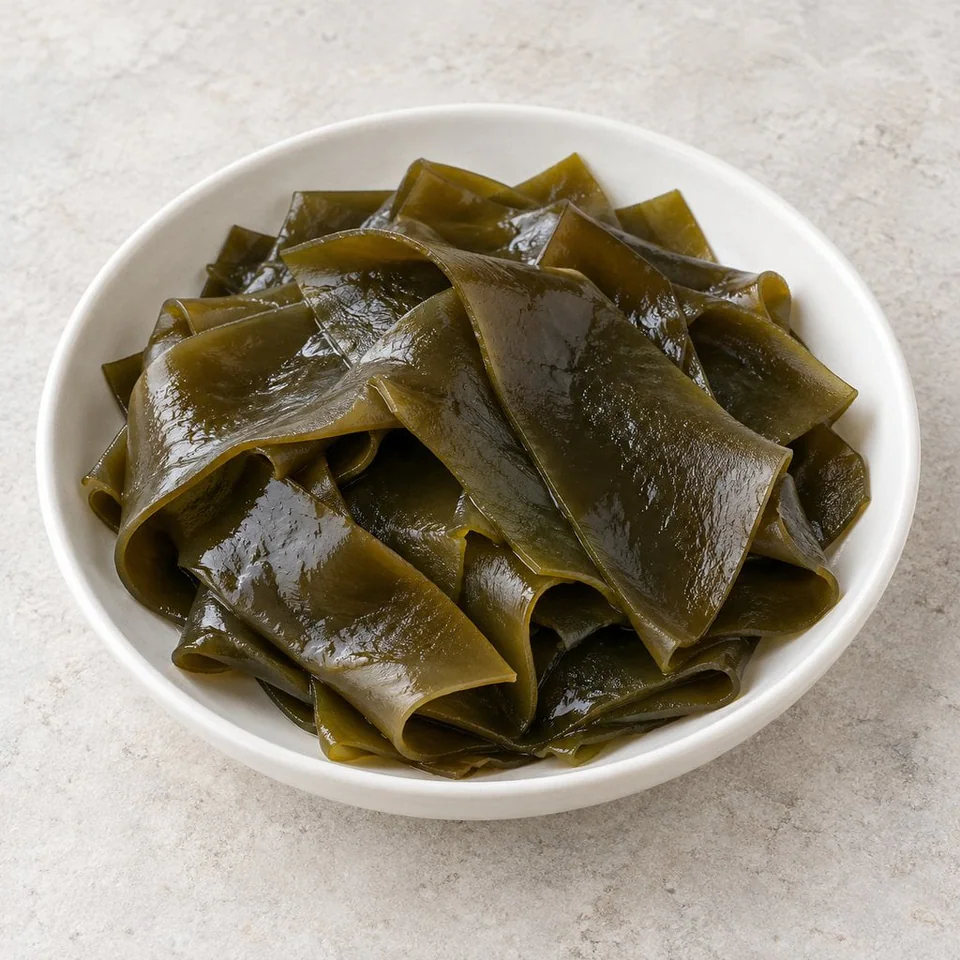
Kelp is a large edible brown seaweed with a mild, savory flavor, used in soups, salads, and side dishes. Per 100 g it provides 13 calories with 1.2 g protein and 2.1 g carbs.

13
kcalper 100g
Carboidrati
2.1g
Proteine
1.2g
Grassi
0.1g
Sfoglia tutti gli alimenti

Valori nutrizionali

Per 100 grammi

Valori di riferimento
Base di misurazione
Stato dell'alimento
Raw
Parte edibile
Fresh seaweed, trimmed
Base di misurazione
Per 100 g raw edible portion
Energia (kcal)
13 kcal
Proteine
1.2 g
Carboidrati
2.1 g
Grassi
0.1 g
Fibra alimentare1
2.5 g
Sodio1
216 mg
Altri nutrienti17
Energia (kJ)
54.4 kJ
Calcio1
80 mg
Potassio
6 mg
Magnesio
21 mg
Ferro
0.9 mg
Zinco
0.1 mg
Vitamina B1
0.01 mg
Vitamina B2
0.01 mg
Vitamina B3
0.1 mg
Vitamina B6
0.5 mg
Vitamina B9 (folato)
38.2 µg
Vitamina B12
0.12 µg
Vitamina C
0.1 mg
Beta-carotene
142 µg
Alfa-carotene
38 µg
Vitamina E (alfa-tocoferolo)
0.07 mg
Vitamina K1 (fillochinone)
14.9 µg
  1. Fonte di dati aggiuntiva[5]

Fonti dei dati

5
  1. 1

    CaloriePilot curated nutrition base

  2. 2

    台湾卫生福利部食品药物管理署

    F0710101 · Not reported

  3. 3

    日本文部科学省

    09017 · 日本食品標準成分表(八訂)増補2023年

  4. 4

    台湾卫生福利部食品药物管理署

    F07001 · Official dataset metadata updated2026-10-05; retrieved2026-10-16

  5. 5

    台湾卫生福利部食品药物管理署

    F07001 · 食品營養成分資料集;詮釋資料更新2026-10-05;2026-10-16下载

Informazioni su questo alimento

Comprendere questo riferimento nutrizionale

Kelp is a large, leafy brown seaweed that grows in cool coastal waters. It is eaten fresh, dried, or rehydrated in East Asian cooking, where it flavors soups and broths or is served as a seasoned salad or side dish.

Nutritionally, kelp is very low in calories and mostly water. Per 100 g it provides about 13 kcal, 2.1 g of carbohydrates, 1.2 g of protein, and 0.1 g of fat. This reference reflects plain kelp without seasoning.

Dried kelp weighs much less than fresh, and rehydrated kelp absorbs water. For accurate tracking, weigh kelp as prepared and note any seasoning or oil, and use the serving sizes below.

Pianifica la tua porzione

Quanto c'è nella tua porzione di Kelp?

Nutrition values are reported per 100 g. A typical 1 cup serving (about 80 g) provides roughly 10 kcal. Use the serving sizes below to estimate portions when logging.

Calcolato dal riferimento per 100 g. I valori sono arrotondati.
PorzionePesoCalorieCarboidratiProteineGrassi
100 g100 g13 kcal2.1 g1.2 g0.1 g
1 cup chopped80 g10.4 kcal1.7 g1 g0.1 g
1/2 cup chopped40 g5.2 kcal0.8 g0.5 g0 g

Usa il peso della parte edibile nello stato dell'alimento mostrato sopra.

Energia (kcal)
13 kcal
Energia (kJ)
54.4 kJ
Proteine
1.2 g
Carboidrati
2.1 g
Grassi
0.1 g
Fibra alimentare1
2.5 g
Sodio1
216 mg
Calcio1
80 mg
Potassio
6 mg
Magnesio
21 mg
Ferro
0.9 mg
Zinco
0.1 mg
Vitamina B1
0.01 mg
Vitamina B2
0.01 mg
Vitamina B3
0.1 mg
Vitamina B6
0.5 mg
Vitamina B9 (folato)
38.2 µg
Vitamina B12
0.12 µg
Vitamina C
0.1 mg
Beta-carotene
142 µg
Alfa-carotene
38 µg
Vitamina E (alfa-tocoferolo)
0.07 mg
Vitamina K1 (fillochinone)
14.9 µg

Domande e risposte

Kelp FAQ sulla nutrizione

How many calories are in kelp?

Kelp provides about 13 calories per 100 g. A typical 1 cup serving (about 80 g) provides roughly 10 calories.

Is kelp low in calories?

Yes. Kelp is mostly water and very low in calories, providing about 13 kcal per 100 g.

How is kelp usually eaten?

Kelp is used to flavor soups and broths or served as a seasoned salad or side dish. Dried kelp is often rehydrated before use.