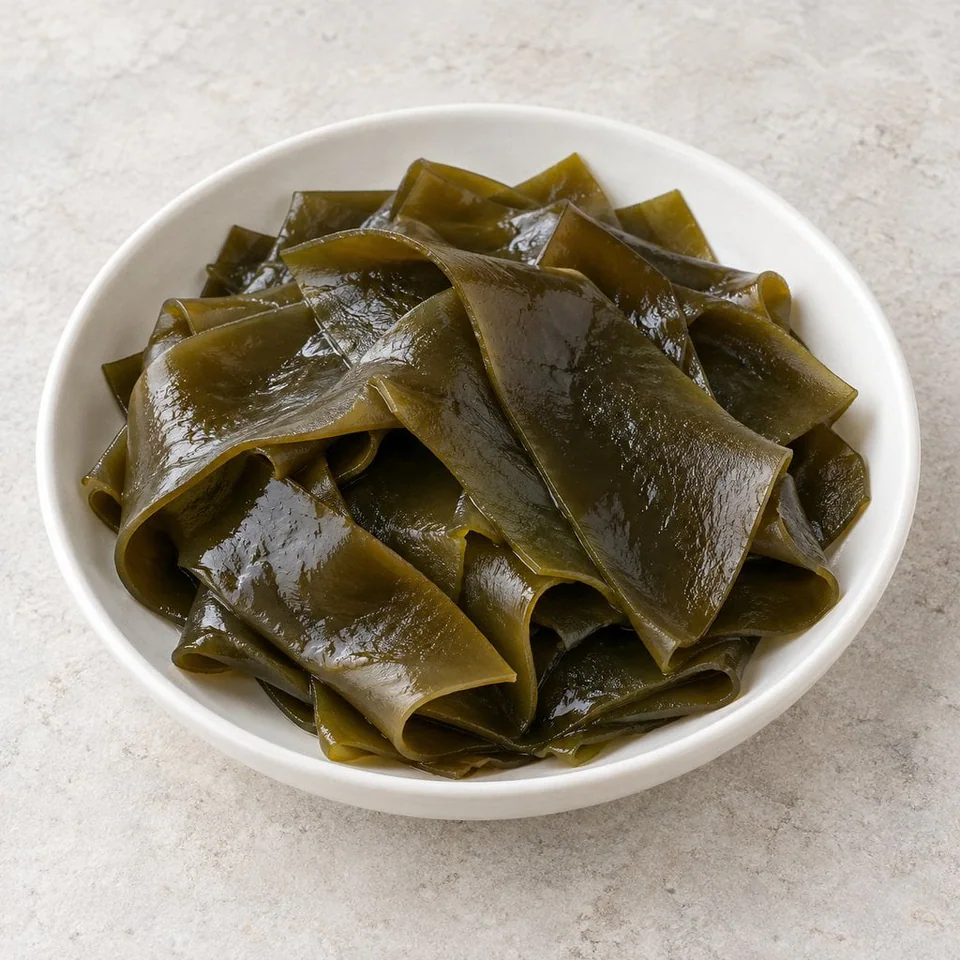
Kelp is a large edible brown seaweed with a mild, savory flavor, used in soups, salads, and side dishes. Per 100 g it provides 13 calories with 1.2 g protein and 2.1 g carbs.
Kelp is a large, leafy brown seaweed that grows in cool coastal waters. It is eaten fresh, dried, or rehydrated in East Asian cooking, where it flavors soups and broths or is served as a seasoned salad or side dish.
Nutritionally, kelp is very low in calories and mostly water. Per 100 g it provides about 13 kcal, 2.1 g of carbohydrates, 1.2 g of protein, and 0.1 g of fat. This reference reflects plain kelp without seasoning.
Dried kelp weighs much less than fresh, and rehydrated kelp absorbs water. For accurate tracking, weigh kelp as prepared and note any seasoning or oil, and use the serving sizes below.
Plan your portion
How much is in your serving of Kelp?
Nutrition values are reported per 100 g. A typical 1 cup serving (about 80 g) provides roughly 10 kcal. Use the serving sizes below to estimate portions when logging.
Calculated from the per-100-g reference. Values are rounded.
Serving
Weight
Calories
Carbs
Protein
Fat
100 g
100 g
13 kcal
2.1 g
1.2 g
0.1 g
1 cup chopped
80 g
10.4 kcal
1.7 g
1 g
0.1 g
1/2 cup chopped
40 g
5.2 kcal
0.8 g
0.5 g
0 g
Use the weight of the edible portion in the food state shown above.