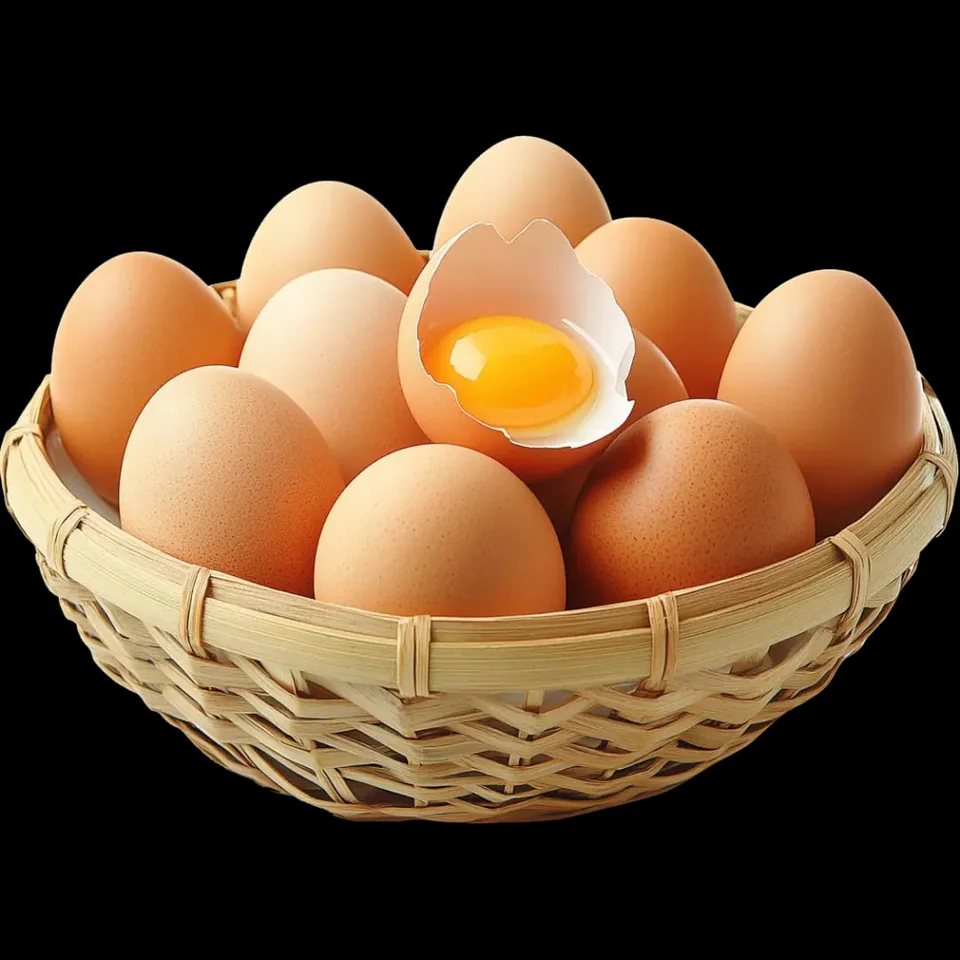
Egg is a whole chicken egg, a versatile and protein-rich food. Per 100 g it provides 12.4 g protein and 9.96 g fat. Energy is under review: USDA reports 143 kcal using general factors and 147 kcal using specific factors.
Egg is a whole chicken egg, one of the most versatile and widely used foods. It can be boiled, fried, scrambled, poached, or used as a binding and leavening ingredient in baking.
Per 100 g raw edible portion, USDA FDC 748967 reports 0.96 g carbohydrate by difference, 12.4 g protein, 9.96 g total fat, 129 mg sodium and 48 mg calcium. Source energy is 143 kcal using Atwater general factors or 147 kcal using specific factors; the existing database energy requires reconciliation.
A whole egg includes both the yolk and the white. For accurate tracking, weigh the egg or count whole eggs using the serving sizes below.
วางแผนปริมาณของคุณ
ปริมาณในหน่วยบริโภคของคุณของ Egg?
Nutrition values are reported per 100 g raw edible portion. Existing serving references are 50 g for one large egg and 100 g for two. Energy per serving remains under review because the source uses two Atwater calculation methods.
USDA FDC 748967 reports 143 kcal per 100 g using general Atwater factors and 147 kcal using food-specific factors. The existing database energy value is retained pending reconciliation.
How much protein is in an egg?
A whole egg provides about 12.4 g of protein per 100 g.
Is egg high in protein?
Yes. Eggs are a complete-protein food, providing about 12.4 g of protein per 100 g.