PearNutrition reference
Fruit

Pear

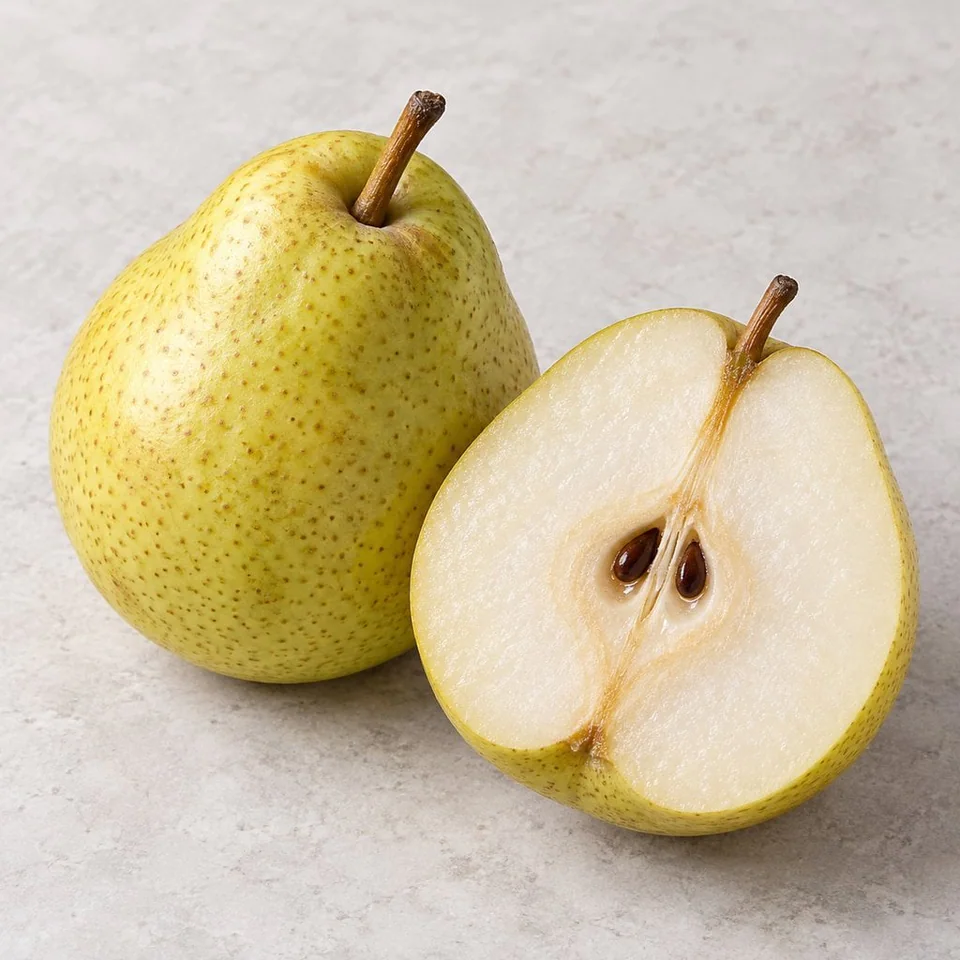
Pears are sweet, juicy fruits with soft, grainy flesh, eaten fresh or cooked. Per 100 g they provide 57 calories with 15.2 g carbs and 3.1 g fiber.

57
kcalper 100g
Carbs
15.23g
Protein
0.36g
Fat
0.14g
Browse all foods

Nutrition facts

Per 100 grams

Reference values
Measurement basis
Food state
Raw
Edible portion
Fresh fruit, with skin
Measurement basis
Per 100 g raw edible portion
Energy (kcal)
57 kcal
Protein
0.36 g
Carbohydrates
15.23 g
Fat
0.14 g
Dietary fiber
3.1 g
Sugars
9.75 g
Saturated fat
0.022 g
Sodium
1 mg
More nutrients24
Energy (kJ)
238.5 kJ
Trans fat1
0 g
Cholesterol1
0 mg
Calcium
9 mg
Potassium
116 mg
Magnesium
7 mg
Iron
0.18 mg
Zinc
0.1 mg
Vitamin B1
0.012 mg
Vitamin B2
0.026 mg
Vitamin B3
0.161 mg
Vitamin B5
0.049 mg
Vitamin B6
0.029 mg
Vitamin B9 (folate)
7 µg
Vitamin B121
0 µg
Vitamin C
4.3 mg
Vitamin D1
0 µg
Vitamin A (RAE)
1 µg
Retinol1
0 µg
Beta-carotene
14 µg
Alpha-carotene
1 µg
Beta-cryptoxanthin
2 µg
Vitamin E (alpha-tocopherol)
0.12 mg
Vitamin K1 (phylloquinone)
4.4 µg
  1. Assumed zero by source

Data sources

2
  1. 1

    CaloriePilot curated nutrition base

    169118 · SR Legacy, April 2018 release

  2. 2

    日本文部科学省

    07090 · 日本食品標準成分表(八訂)増補2023年

About this food

Understanding this nutrition reference

Pears are sweet, juicy fruits with soft, slightly grainy flesh and a thin skin. They are usually eaten fresh, and are also poached, baked, or canned. Varieties range from crisp Asian pears to soft, buttery European types.

Nutritionally, pears are mostly water and natural sugar. Per 100 g they provide about 57 kcal, 15.2 g of carbohydrates, 0.4 g of protein, and 0.1 g of fat, with 3.1 g of dietary fiber, 1 mg of sodium, and 9 mg of calcium.

Pears are often eaten with the skin, which adds fiber. For accurate tracking, weigh the whole fruit or the portion eaten, and use the serving sizes below.

Plan your portion

How much is in your serving of Pear?

Nutrition values are reported per 100 g. A typical medium pear (about 178 g) provides roughly 101 kcal. Use the serving sizes below to estimate portions when logging.

Calculated from the per-100-g reference. Values are rounded.
ServingWeightCaloriesCarbsProteinFat
100 g100 g57 kcal15.2 g0.4 g0.1 g
1 medium pear178 g101.5 kcal27.1 g0.6 g0.2 g
1/2 cup sliced70 g39.9 kcal10.7 g0.3 g0.1 g

Use the weight of the edible portion in the food state shown above.

Energy (kcal)
57 kcal
Energy (kJ)
238.5 kJ
Protein
0.36 g
Carbohydrates
15.23 g
Fat
0.14 g
Dietary fiber
3.1 g
Sugars
9.75 g
Saturated fat
0.022 g
Trans fat1
0 g
Cholesterol1
0 mg
Sodium
1 mg
Calcium
9 mg
Potassium
116 mg
Magnesium
7 mg
Iron
0.18 mg
Zinc
0.1 mg
Vitamin B1
0.012 mg
Vitamin B2
0.026 mg
Vitamin B3
0.161 mg
Vitamin B5
0.049 mg
Vitamin B6
0.029 mg
Vitamin B9 (folate)
7 µg
Vitamin B121
0 µg
Vitamin C
4.3 mg
Vitamin D1
0 µg
Vitamin A (RAE)
1 µg
Retinol1
0 µg
Beta-carotene
14 µg
Alpha-carotene
1 µg
Beta-cryptoxanthin
2 µg
Vitamin E (alpha-tocopherol)
0.12 mg
Vitamin K1 (phylloquinone)
4.4 µg

Questions and answers

Pear nutrition FAQ

How many calories are in a pear?

A pear provides about 57 calories per 100 g. A medium pear (about 178 g) provides roughly 101 calories.

Are pears high in fiber?

Pears provide about 3.1 g of dietary fiber per 100 g, especially with the skin on.

Are pears high in sugar?

Pears contain natural sugars, providing about 15.2 g of carbohydrates per 100 g. They are a source of natural sweetness.