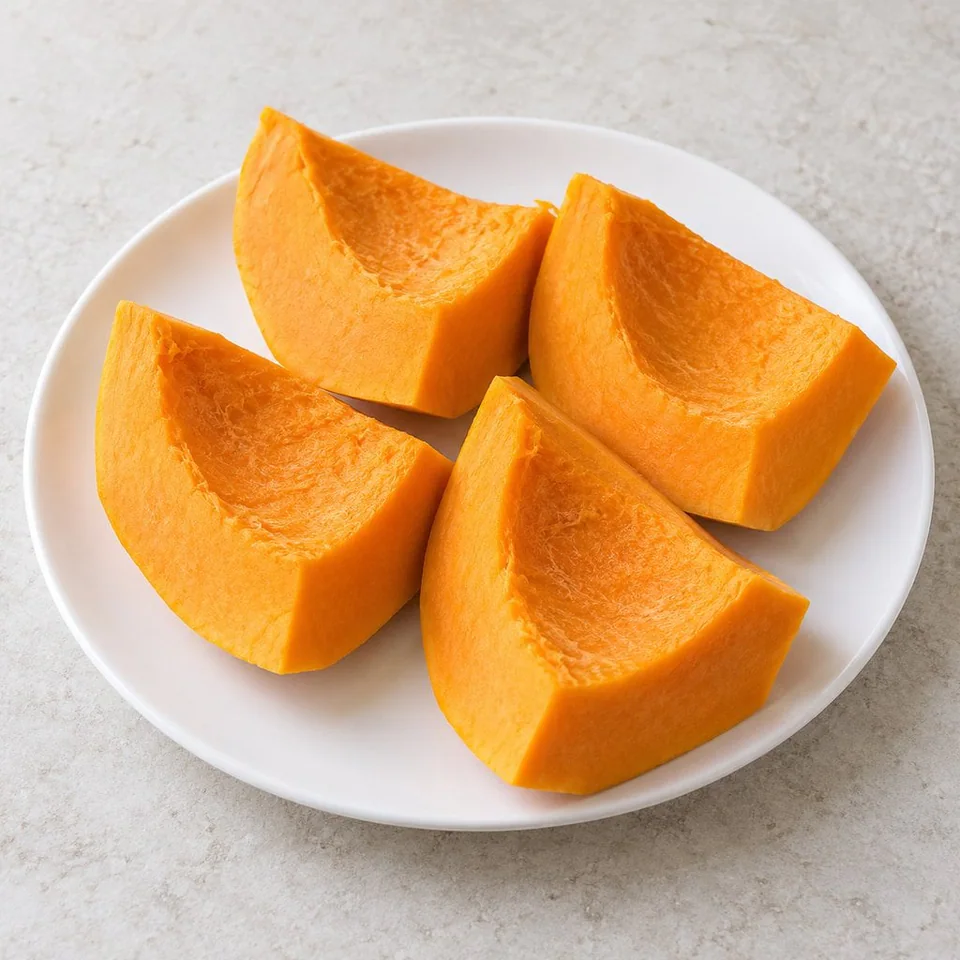
Pumpkin is a sweet, orange-fleshed winter squash eaten cooked in soups, roasts, and baked goods. Per 100 g it provides 26 calories with 6.5 g carbs and 1 g protein.
Pumpkin is a round, orange-fleshed winter squash with a mildly sweet flavor. It is eaten cooked in soups, roasted, mashed, or puréed, and its flesh is used in both savory dishes and baked goods.
Nutritionally, pumpkin is low in calories and mostly water. Per 100 g it provides about 26 kcal, 6.5 g of carbohydrates, 1 g of protein, and 0.1 g of fat, with 0.5 g of dietary fiber, 1 mg of sodium, and 21 mg of calcium.
Pumpkin is usually cooked before eating, which softens the flesh and concentrates its flavor slightly. For accurate tracking, weigh the raw or cooked flesh without the skin or seeds, and use the serving sizes below.
Plan your portion
How much is in your serving of Pumpkin?
Nutrition values are reported per 100 g. A typical 1 cup of cubed pumpkin (about 116 g) provides roughly 30 kcal. Use the serving sizes below to estimate portions when logging.
Calculated from the per-100-g reference. Values are rounded.
Serving
Weight
Calories
Carbs
Protein
Fat
100 g
100 g
26 kcal
6.5 g
1 g
0.1 g
1 cup cubed
116 g
30.2 kcal
7.5 g
1.2 g
0.1 g
3 oz
85 g
22.1 kcal
5.5 g
0.9 g
0.1 g
Use the weight of the edible portion in the food state shown above.