Nutrition facts
Per 100 millilitres
Measurement basis
- Food state
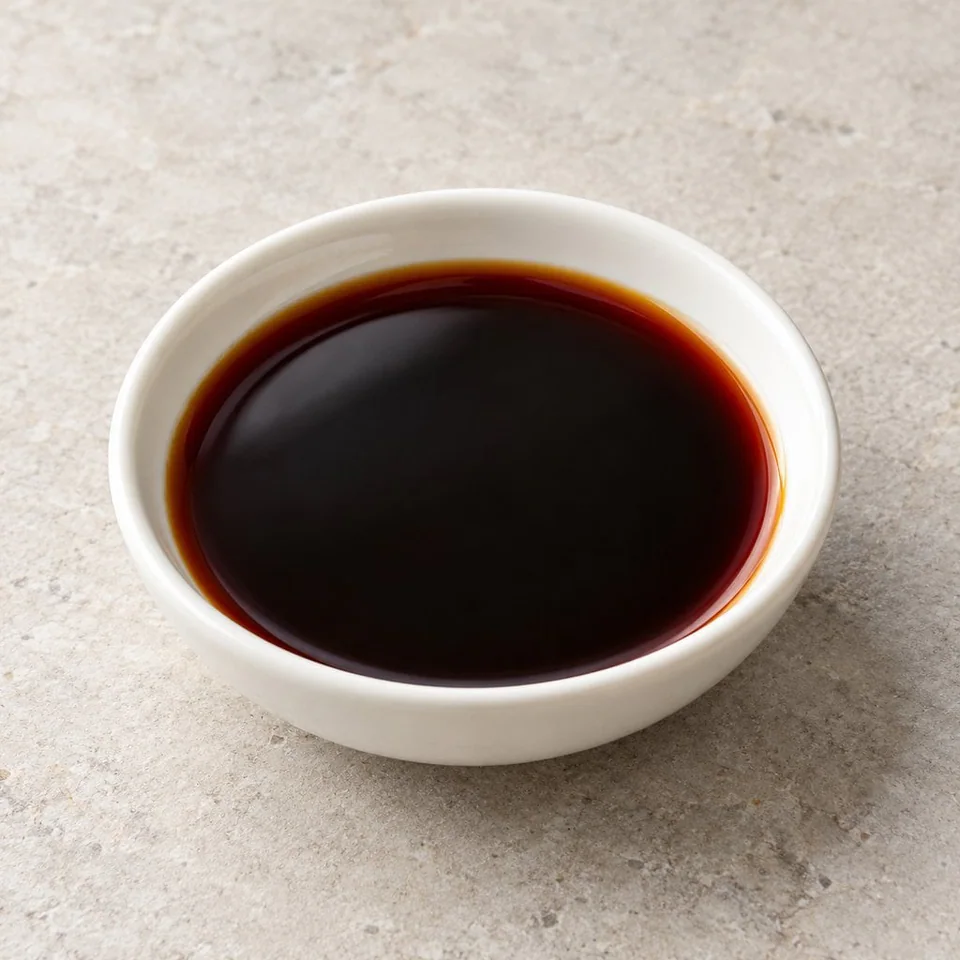
- Regular brewed soy sauce made with soybeans and wheat
- Edible portion
- Regular brewed soy sauce made with soybeans and wheat
- Measurement basis
- Per100 ml of the food as described
- Energy (kcal)1
- 57.3486 kcal
- Protein
- 8.80788 g
- Carbohydrates
- 5.3345 g
- Fat
- 0.616768 g
- Dietary fiber
- 0.865639 g
- Sugars
- 0.432819 g
- Saturated fat
- 0.0789896 g
- Sodium
- 5940.45 mg
More nutrients22
- Energy (kJ)1
- 239.9 kJ
- Cholesterol
- 0 mg
- Calcium
- 35.7076 mg
- Potassium
- 470.691 mg
- Magnesium
- 80.0716 mg
- Iron
- 1.56897 mg
- Zinc
- 0.941382 mg
- Vitamin B1
- 0.0357076 mg
- Vitamin B2
- 0.178538 mg
- Vitamin B3
- 2.38051 mg
- Vitamin B6
- 0.160143 mg
- Vitamin B9 (folate)
- 15.1487 µg
- Vitamin B12
- 0 µg
- Vitamin C
- 0 mg
- Vitamin D
- 0 µg
- Vitamin A (RAE)
- 0 µg
- Retinol
- 0 µg
- Beta-carotene
- 0 µg
- Alpha-carotene
- 0 µg
- Beta-cryptoxanthin
- 0 µg
- Vitamin E (alpha-tocopherol)
- 0 mg
- Vitamin K1 (phylloquinone)
- 0 µg
- Calculated energy value.