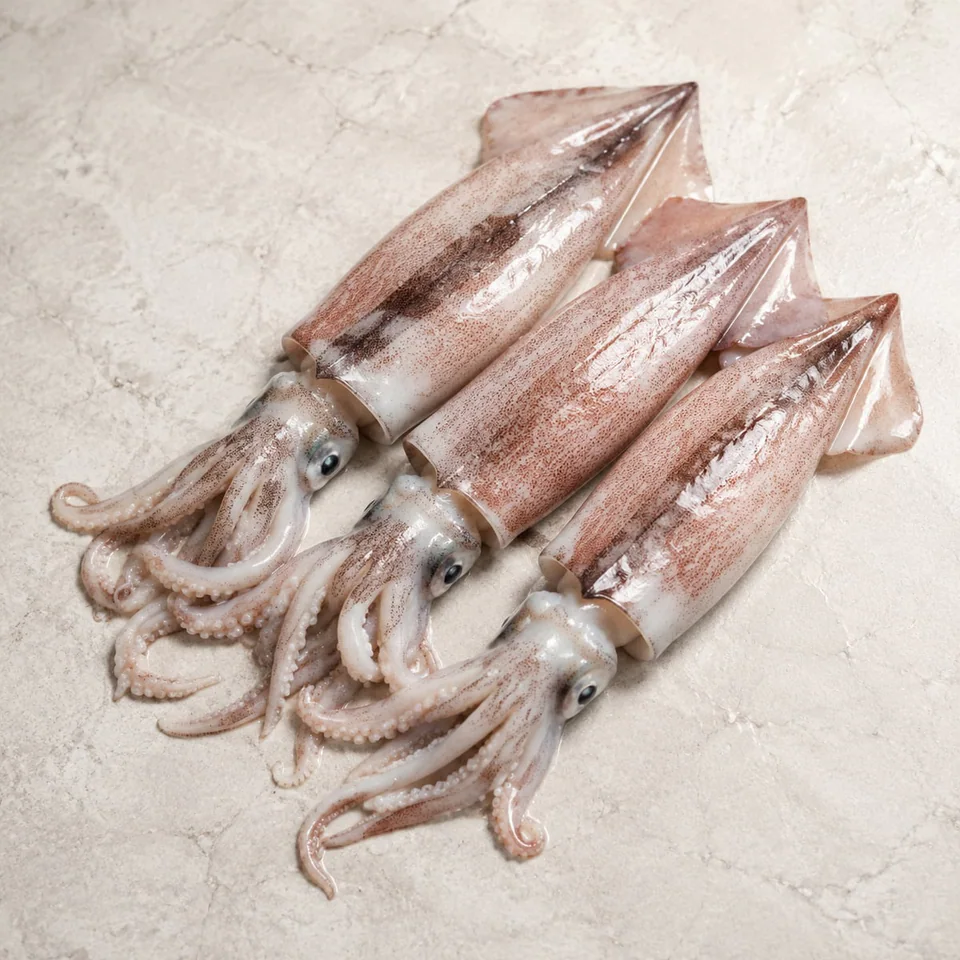
Squid (calamari) is a mild, low-fat seafood with a firm, slightly chewy texture, commonly enjoyed grilled, fried, or added to soups, stews, and salads.
Squid, also known as calamari, is a mild-flavored cephalopod with a firm, slightly chewy texture. Its meat is low in fat and has a delicate taste that pairs well with grilling, quick frying, and slow braising, and it is a common ingredient in Mediterranean and Asian cuisines.
Nutritionally, squid is a lean source of protein with very little fat and only small amounts of carbohydrate. It also supplies minerals such as selenium, phosphorus, and copper. Because it is low in calories relative to its protein content, it fits well into high-protein and calorie-conscious eating plans.
Plan your portion
How much is in your serving of Squid?
Nutrition values are reported per 100 g of raw edible squid (tubes only). A typical 3 oz (85 g) serving provides roughly 37 kcal. Use the serving sizes below to estimate portions when logging.
Calculated from the per-100-g reference. Values are rounded.
Serving
Weight
Calories
Carbs
Protein
Fat
100 g
100 g
44 kcal
0.9 g
8.8 g
0.6 g
3 oz (about 85 g)
85 g
37.4 kcal
0.8 g
7.5 g
0.5 g
Use the weight of the edible portion in the food state shown above.