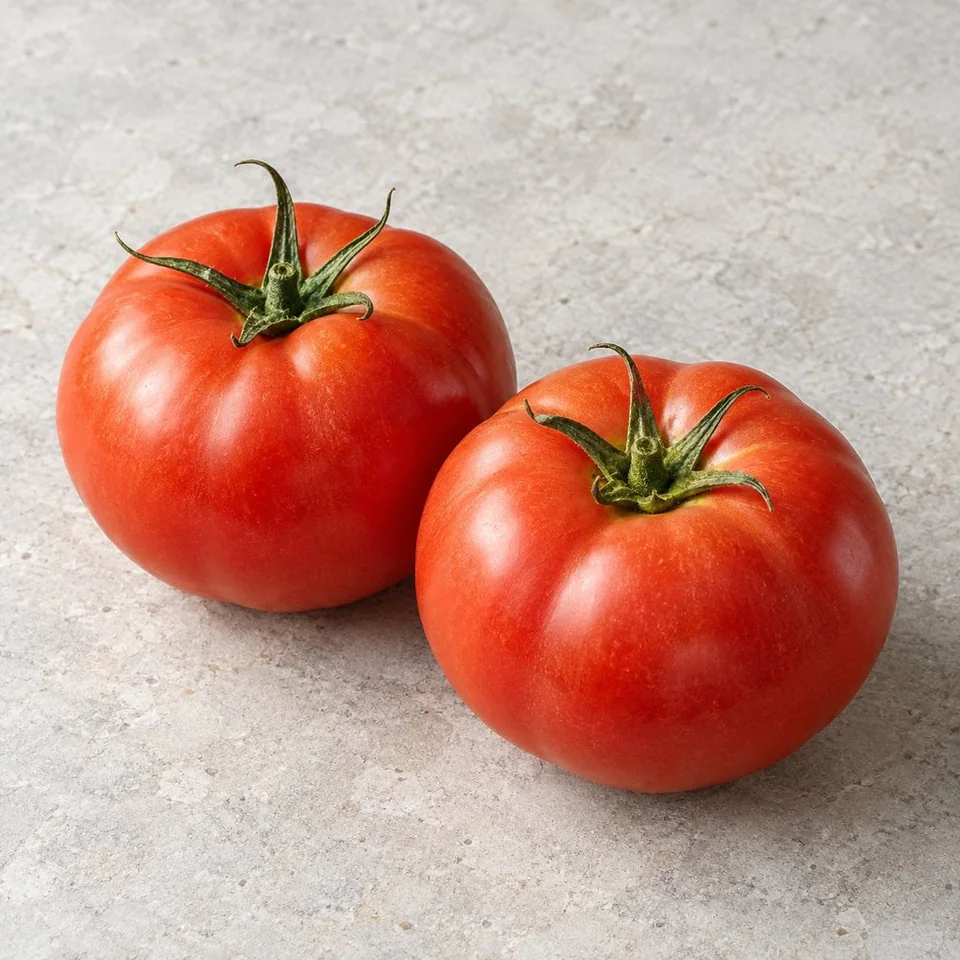
Tomatoes are juicy red fruits used as a vegetable in salads, sauces, and cooked dishes worldwide. Per 100 g they provide 20 calories with 4 g carbs and 1.2 g fiber.
Tomatoes are the fleshy fruit of the tomato plant (Solanum lycopersicum), eaten as a vegetable in cuisines around the world. They are enjoyed raw in salads and sandwiches, blended into sauces and soups, or roasted and grilled. Varieties range from small cherry tomatoes to large beefsteak types.
Nutritionally, raw tomatoes are very low in calories and mostly water. Per 100 g they provide about 20 kcal, 4 g of carbohydrates, 0.8 g of protein, and 0.3 g of fat, with 1.2 g of dietary fiber, 4 mg of sodium, and 10 mg of calcium.
Tomatoes are versatile and are often eaten both raw and cooked. Cooking concentrates their flavor and changes their texture without adding many calories. For accurate tracking, weigh tomatoes by preparation method and use the serving sizes below.
Plan your portion
How much is in your serving of Tomato?
Nutrition values are reported per 100 g. A typical medium tomato (about 123 g) provides roughly 25 kcal. Use the serving sizes below to estimate portions when logging.
Calculated from the per-100-g reference. Values are rounded.
Serving
Weight
Calories
Carbs
Protein
Fat
100 g
100 g
20 kcal
4 g
0.8 g
0.3 g
1 medium tomato
123 g
24.6 kcal
5 g
1 g
0.4 g
1 cup chopped
180 g
36 kcal
7.3 g
1.5 g
0.6 g
Use the weight of the edible portion in the food state shown above.
Energy (kcal)
20 kcal
Energy (kJ)
83.7 kJ
Protein
0.82 g
Carbohydrates
4.04 g
Fat
0.31 g
Dietary fiber
1.2 g
Sugars
2.63 g
Saturated fat
0.028 g
Cholesterol
0 mg
Sodium
4 mg
Calcium
10 mg
Potassium
226 mg
Magnesium
10 mg
Iron
0.22 mg
Zinc
0.15 mg
Vitamin B1
0.046 mg
Vitamin B2
0.018 mg
Vitamin B3
0.597 mg
Vitamin B6
0.078 mg
Vitamin B9 (folate)
13 µg
Vitamin B12
0 µg
Vitamin C
16.3 mg
Vitamin D
0 µg
Vitamin A (RAE)
32 µg
Retinol
0 µg
Beta-carotene
397 µg
Alpha-carotene
61 µg
Beta-cryptoxanthin
6 µg
Vitamin E (alpha-tocopherol)
0.58 mg
Vitamin K1 (phylloquinone)
7.5 µg
Questions and answers
Tomato nutrition FAQ
How many calories are in a tomato?
A raw tomato provides about 20 calories per 100 g. A medium tomato (about 123 g) provides roughly 25 calories.
Are tomatoes a fruit or a vegetable?
Botanically tomatoes are fruits, but they are commonly prepared and eaten as a vegetable in cooking and nutrition tracking.
Are tomatoes high in carbs?
No. Tomatoes provide about 4 g of carbohydrates per 100 g, mostly natural sugars, along with 1.2 g of fiber. They are a low-calorie, low-carbohydrate vegetable.