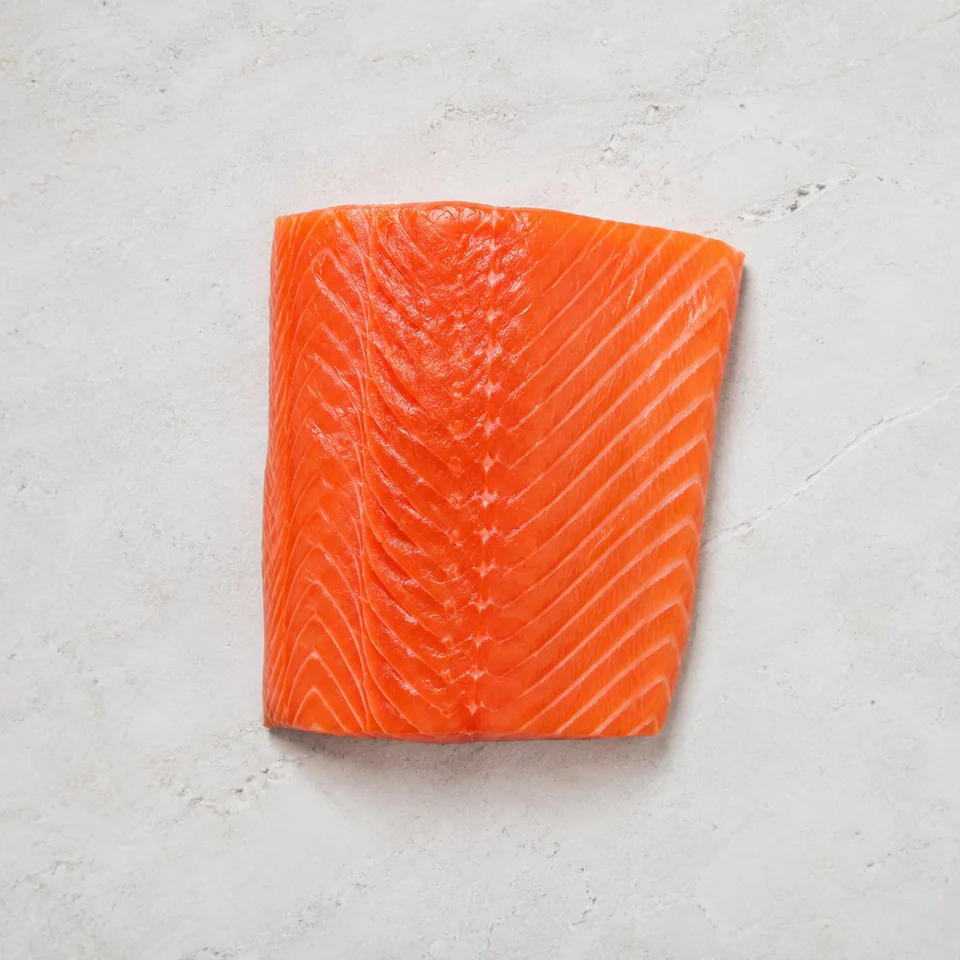
This record uses USDA data for raw, wild-caught sockeye salmon, rather than all salmon species or farming methods. Per 100 g of edible portion it provides about 130 kcal, 22.3 g protein, 4.94 g fat and 0.722 g saturated fat. The source reports 0 g carbohydrate by difference. The source also reports 0.211 g EPA and 0.326 g DHA per 100 g. These values do not describe smoked, cured or cooked salmon.
分量を計画する
1食分の量はどのくらいですか Salmon?
Nutrition values are reported per 100 g of raw salmon. A typical 4 oz fillet (about 113 g) provides roughly 147 kcal. Use the serving sizes below to estimate portions when logging.
基準となる100gあたりから計算されています。値は四捨五入されています。
1食分
体重
カロリー
炭水化物
タンパク質
脂肪
100 g
100 g
130 kcal
0 g
22.3 g
4.9 g
4 oz fillet
113 g
146.9 kcal
0 g
25.2 g
5.6 g
8 oz fillet
227 g
295.1 kcal
0 g
50.6 g
11.2 g
上記の食品状態での可食部の重量を使用してください。
エネルギー(kcal)
130 kcal
エネルギー(kJ)
543.9 kJ
タンパク質
22.3 g
炭水化物
0 g
脂肪
4.936 g
食物繊維
0 g
飽和脂肪
0.722 g
コレステロール
59.3 mg
ナトリウム
53.3 mg
カルシウム
14.84 mg
カリウム
329.7 mg
マグネシウム
26.15 mg
鉄
0.4024 mg
亜鉛
0.4246 mg
ビタミンB12
5.16 µg
レチノール
42.81 µg
質問と回答
Salmon 栄養FAQ
How many calories are in salmon?
Salmon provides about 130 calories per 100 g. A typical 4 oz fillet (about 113 g) provides roughly 147 calories.
Is salmon high in protein?
Yes. Salmon provides about 22.3 g of protein per 100 g.
Is salmon high in omega-3?
The cited raw, wild-caught sockeye salmon record reports 0.211 g EPA and 0.326 g DHA per 100 g. These are omega-3 fatty acids.