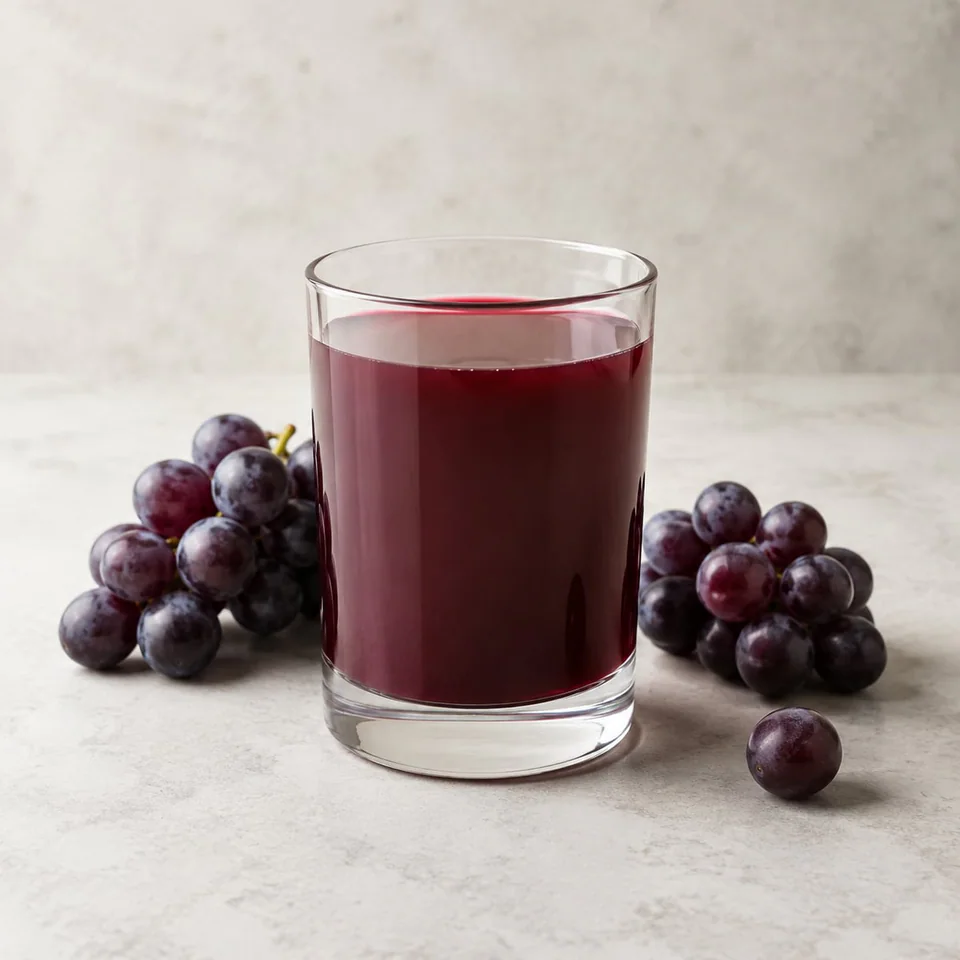
Grape juice is a sweet beverage made by pressing fresh grapes. It is enjoyed on its own and is also used in smoothies, sauces, and cooking.
Nutritionally, grape juice is mostly carbohydrate from natural sugars. Per 100 g it provides about 66 kcal, 15.6 g of carbohydrates, 0.3 g of protein, and 0.3 g of fat.
Whole grapes provide more fiber than juice. Use the serving sizes below to estimate portions when logging.
Plan your portion
How much is in your serving of Grape Juice?
Nutrition values are reported per 100 g. A typical cup (240 ml) provides roughly 159 kcal. Use the serving sizes below to estimate portions when logging.
100 ml: 100 ml. A serving amount in g is needed to calculate nutrition for this serving.
1 cup: 240 ml. A serving amount in g is needed to calculate nutrition for this serving.
1/2 cup: 120 ml. A serving amount in g is needed to calculate nutrition for this serving.
Use the weight of the edible portion in the food state shown above.
Energy (kcal)
66.1 kcal
Energy (kJ)
276.6 kJ
Protein
0.258 g
Carbohydrates
15.6 g
Fat
0.288 g
Dietary fiber
0 g
Sugars
14 g
Sodium
4.02 mg
Calcium
9.74 mg
Potassium
49.8 mg
Magnesium
7.87 mg
Iron
0.041 mg
Zinc
0.057 mg
Vitamin B1
0.026 mg
Vitamin B3
0.016 mg
Vitamin B6
0.039 mg
Vitamin B9 (folate)
0.664 µg
Vitamin C
45.6 mg
Questions and answers
Grape Juice nutrition FAQ
How many calories are in grape juice?
Grape juice provides about 66 calories per 100 ml. A typical cup (240 ml) provides roughly 159 calories.
Is grape juice high in sugar?
Grape juice provides about 15.6 g of carbohydrates per 100 ml, mostly from natural sugars.
Does grape juice have fiber?
Grape juice contains little fiber compared with whole grapes.