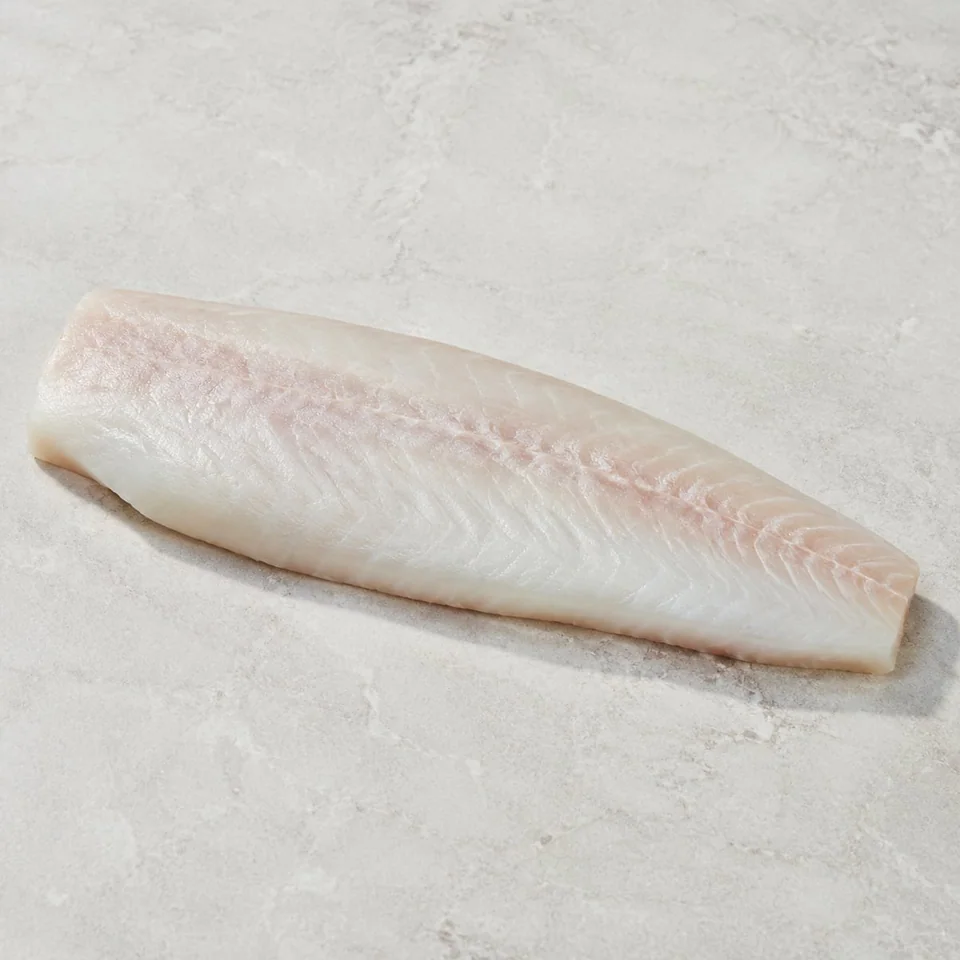
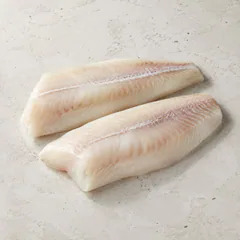
Haddock is a lean, white saltwater fish with a mild, slightly sweet flavor, closely related to cod. It is baked, grilled, steamed, or battered and fried, and is popular in fish and chips.
Nutritionally, haddock is low in fat and high in protein. Per 100 g it provides about 74 kcal, 16.3 g of protein, 0.5 g of fat, and no carbohydrates, with 213 mg of sodium and 11 mg of calcium.
Haddock is very lean, so cooking methods and added sauces determine the final calories. For accurate tracking, weigh the raw fillet, and use the serving sizes below.
Planifiez votre portion
Quelle quantité contient votre portion de Haddock?
Nutrition values are reported per 100 g. A typical 3 oz serving (about 85 g) provides roughly 63 kcal. Use the serving sizes below to estimate portions when logging.
Calculé à partir de la référence par 100 g. Les valeurs sont arrondies.
Portion
Poids
Calories
Glucides
Protéines
Graisse
100 g
100 g
74 kcal
0 g
16.3 g
0.5 g
3 oz
85 g
62.9 kcal
0 g
13.9 g
0.4 g
1 fillet
113 g
83.6 kcal
0 g
18.4 g
0.5 g
Utilisez le poids de la partie comestible dans l'état de l'aliment indiqué ci-dessus.
Énergie (kcal)
74 kcal
Énergie (kJ)
308 kJ
Protéines
16.3 g
Glucides
0 g
Graisse
0.45 g
Fibres alimentaires
0 g
Acides gras saturés
0.093 g
Gras trans
0.004 g
Cholestérol
54 mg
Sodium
213 mg
Calcium
11 mg
Potassium
286 mg
Magnésium
21.1 mg
Fer
0.17 mg
Zinc
0.32 mg
Vitamine B1
0.02 mg
Vitamine B2
0.057 mg
Vitamine B3
3.36 mg
Vitamine B5
0.403 mg
Vitamine B6
0.281 mg
Vitamine B12
1.83 µg
Vitamine D
0.5 µg
Vitamine E (alpha-tocophérol)
0.45 mg
Questions et réponses
Haddock FAQ nutrition
How many calories are in haddock?
Haddock provides about 74 calories per 100 g. A typical 3 oz serving (about 85 g) provides roughly 63 calories.
Is haddock high in protein?
Yes. Haddock provides about 16.3 g of protein per 100 g and is very low in fat.
How is haddock cooked?
Haddock is baked, grilled, steamed, or battered and fried. It is popular in fish and chips.