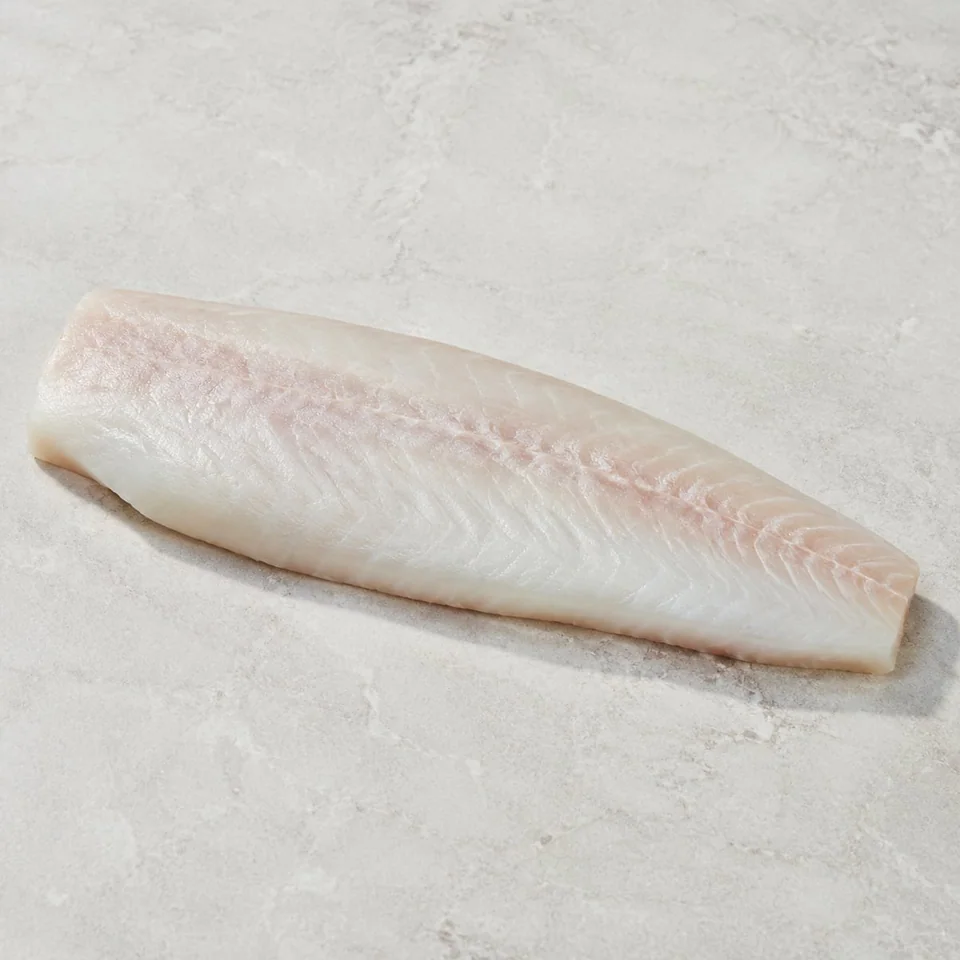
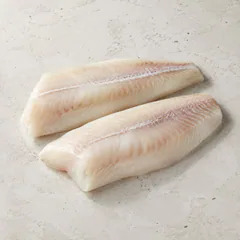
Haddock is a lean, white saltwater fish with a mild, slightly sweet flavor, closely related to cod. It is baked, grilled, steamed, or battered and fried, and is popular in fish and chips.
Nutritionally, haddock is low in fat and high in protein. Per 100 g it provides about 74 kcal, 16.3 g of protein, 0.5 g of fat, and no carbohydrates, with 213 mg of sodium and 11 mg of calcium.
Haddock is very lean, so cooking methods and added sauces determine the final calories. For accurate tracking, weigh the raw fillet, and use the serving sizes below.
Plan your portion
How much is in your serving of Haddock?
Nutrition values are reported per 100 g. A typical 3 oz serving (about 85 g) provides roughly 63 kcal. Use the serving sizes below to estimate portions when logging.
Calculated from the per-100-g reference. Values are rounded.
Serving
Weight
Calories
Carbs
Protein
Fat
100 g
100 g
74 kcal
0 g
16.3 g
0.5 g
3 oz
85 g
62.9 kcal
0 g
13.9 g
0.4 g
1 fillet
113 g
83.6 kcal
0 g
18.4 g
0.5 g
Use the weight of the edible portion in the food state shown above.
Energy (kcal)
74 kcal
Energy (kJ)
308 kJ
Protein
16.3 g
Carbohydrates
0 g
Fat
0.45 g
Dietary fiber
0 g
Saturated fat
0.093 g
Trans fat
0.004 g
Cholesterol
54 mg
Sodium
213 mg
Calcium
11 mg
Potassium
286 mg
Magnesium
21.1 mg
Iron
0.17 mg
Zinc
0.32 mg
Vitamin B1
0.02 mg
Vitamin B2
0.057 mg
Vitamin B3
3.36 mg
Vitamin B5
0.403 mg
Vitamin B6
0.281 mg
Vitamin B12
1.83 µg
Vitamin D
0.5 µg
Vitamin E (alpha-tocopherol)
0.45 mg
Questions and answers
Haddock nutrition FAQ
How many calories are in haddock?
Haddock provides about 74 calories per 100 g. A typical 3 oz serving (about 85 g) provides roughly 63 calories.
Is haddock high in protein?
Yes. Haddock provides about 16.3 g of protein per 100 g and is very low in fat.
How is haddock cooked?
Haddock is baked, grilled, steamed, or battered and fried. It is popular in fish and chips.