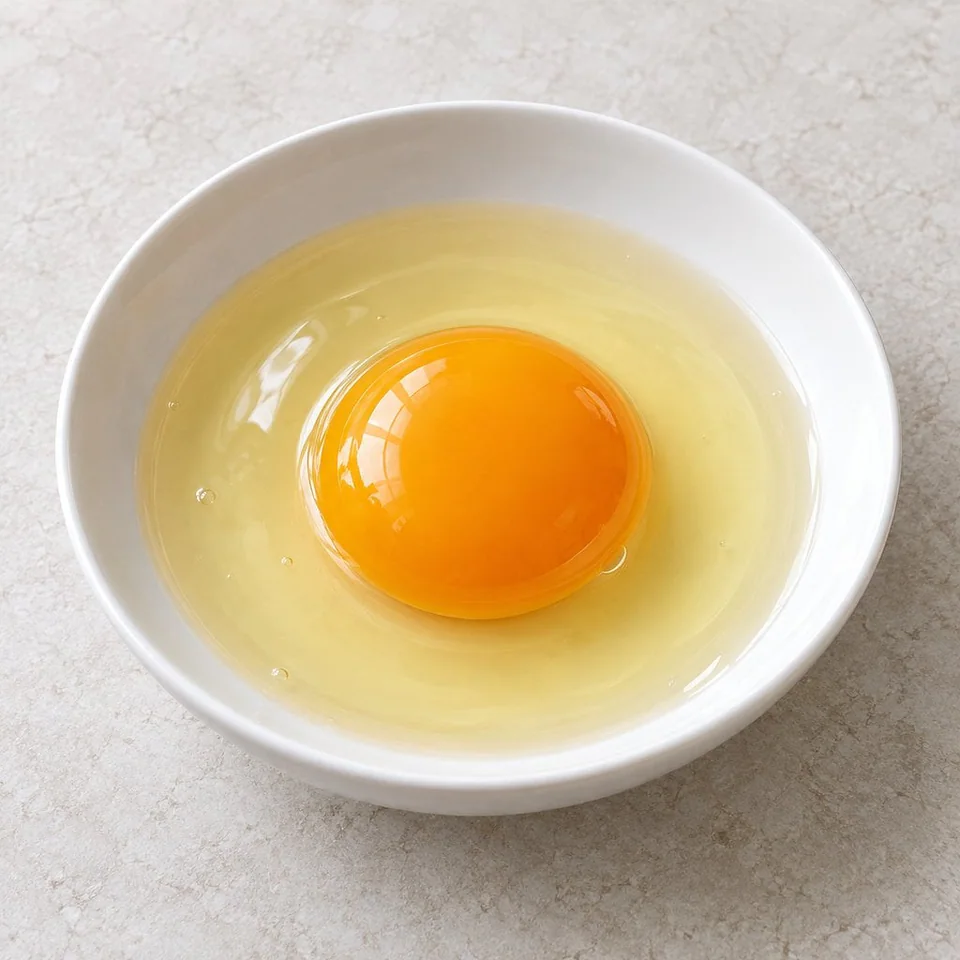
Duck eggs are the eggs laid by ducks, larger than chicken eggs with a proportionally bigger yolk and a richer flavor. They are boiled, fried, scrambled, or used in baking and are common in East and Southeast Asian cooking, including salted and preserved forms.
Nutritionally, duck eggs are a concentrated source of protein and fat. Per 100 g they provide about 185 kcal, 12.8 g of protein, 13.8 g of fat, and 1.5 g of carbohydrates, with 146 mg of sodium and 64 mg of calcium.
A single duck egg weighs more than a chicken egg, so per-egg nutrition is higher. For accurate tracking, weigh the whole egg or count individual eggs, and use the serving sizes below.
Plan your portion
How much is in your serving of Duck Egg?
Nutrition values are reported per 100 g. A typical duck egg (about 70 g) provides roughly 130 kcal. Use the serving sizes below to estimate portions when logging.
Calculated from the per-100-g reference. Values are rounded.
Serving
Weight
Calories
Carbs
Protein
Fat
100 g
100 g
185 kcal
1.5 g
12.8 g
13.8 g
1 duck egg
70 g
129.5 kcal
1 g
9 g
9.6 g
2 duck eggs
140 g
259 kcal
2 g
17.9 g
19.3 g
Use the weight of the edible portion in the food state shown above.
Energy (kcal)
185 kcal
Energy (kJ)
774 kJ
Protein
12.81 g
Carbohydrates
1.45 g
Fat
13.77 g
Dietary fiber
0 g
Sugars
0.93 g
Saturated fat
3.681 g
Cholesterol
884 mg
Sodium
146 mg
Calcium
64 mg
Potassium
222 mg
Magnesium
17 mg
Iron
3.85 mg
Zinc
1.41 mg
Vitamin B1
0.156 mg
Vitamin B2
0.404 mg
Vitamin B3
0.2 mg
Vitamin B5
1.862 mg
Vitamin B6
0.25 mg
Vitamin B9 (folate)
80 µg
Vitamin B12
5.4 µg
Vitamin C
0 mg
Vitamin D
1.7 µg
Vitamin A (RAE)
194 µg
Retinol
192 µg
Beta-carotene
14 µg
Beta-cryptoxanthin
12 µg
Vitamin E (alpha-tocopherol)
1.34 mg
Vitamin K1 (phylloquinone)
0.4 µg
Questions and answers
Duck Egg nutrition FAQ
How many calories are in a duck egg?
A typical duck egg (about 70 g) provides roughly 130 calories. Per 100 g, duck eggs provide about 185 calories.
Are duck eggs bigger than chicken eggs?
Yes. Duck eggs are larger and have a proportionally bigger yolk than chicken eggs, so a single duck egg provides more calories, protein, and fat.
How should I cook duck eggs?
Duck eggs can be boiled, fried, scrambled, or used in baking. They are also commonly salted or preserved in Asian cooking.