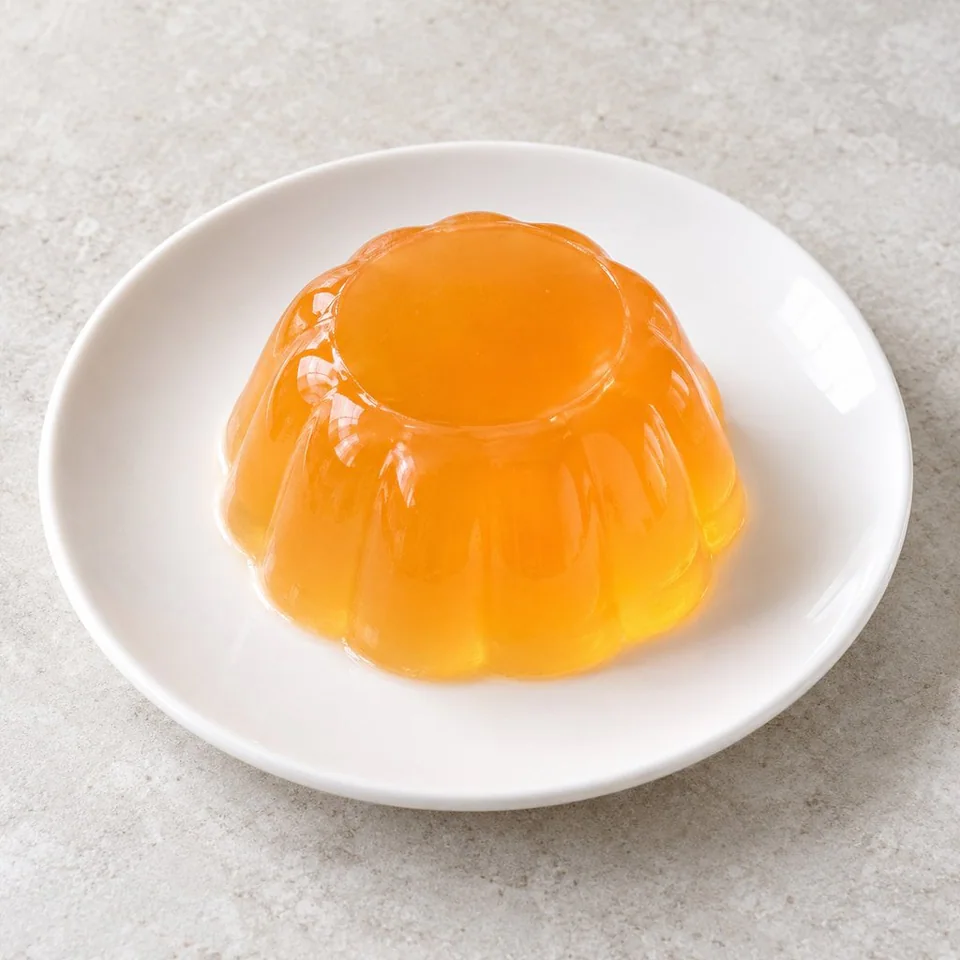
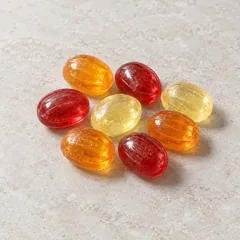
Jelly is a soft, wobbly gelatin dessert, usually fruit-flavored and sweetened. It is made by dissolving gelatin in hot water with sugar and flavoring, then chilling until set, and is often served in cups or as cubes.
Nutritionally, jelly is mostly water and sugar. Per 100 g it provides about 60 kcal and 14.2 g of carbohydrates, with 1.2 g of protein and no fat, along with 75 mg of sodium and 3 mg of calcium.
Sugar-free jelly replaces the sugar with low-calorie sweeteners. For accurate tracking, weigh or measure the serving, and use the serving sizes below.
Plan your portion
How much is in your serving of Jelly?
Nutrition values are reported per 100 g. A typical 1/2 cup serving (about 135 g) provides roughly 81 kcal. Use the serving sizes below to estimate portions when logging.
Calculated from the per-100-g reference. Values are rounded.
Serving
Weight
Calories
Carbs
Protein
Fat
100 g
100 g
60 kcal
14.2 g
1.2 g
0 g
1/2 cup
135 g
81 kcal
19.2 g
1.6 g
0 g
1 cup
270 g
162 kcal
38.3 g
3.3 g
0 g
Use the weight of the edible portion in the food state shown above.
Energy (kcal)
60 kcal
Energy (kJ)
251 kJ
Protein
1.22 g
Carbohydrates
14.2 g
Fat
0 g
Dietary fiber
0 g
Sugars
13.5 g
Saturated fat
0 g
Cholesterol
0 mg
Sodium
75 mg
Calcium
3 mg
Potassium
1 mg
Magnesium
1 mg
Iron
0.02 mg
Zinc
0.01 mg
Vitamin B1
0 mg
Vitamin B2
0.006 mg
Vitamin B3
0.001 mg
Vitamin B6
0 mg
Vitamin B9 (folate)
1 µg
Vitamin B12
0 µg
Vitamin C
0 mg
Vitamin D
0 µg
Vitamin A (RAE)
0 µg
Retinol
0 µg
Beta-carotene
0 µg
Alpha-carotene
0 µg
Beta-cryptoxanthin
0 µg
Vitamin E (alpha-tocopherol)
0 mg
Vitamin K1 (phylloquinone)
0 µg
Questions and answers
Jelly nutrition FAQ
How many calories are in jelly?
Jelly provides about 60 calories per 100 g. A typical 1/2 cup serving (about 135 g) provides roughly 81 calories.
Is jelly high in sugar?
Jelly provides about 14.2 g of carbohydrates per 100 g, mostly from added sugar. Sugar-free versions use low-calorie sweeteners.
Is jelly fat-free?
Yes. Jelly contains no fat, providing about 60 calories per 100 g, mostly from sugar.