Nutrition facts
Per 100 grams
Measurement basis
- Food state
- Raw
- Edible portion
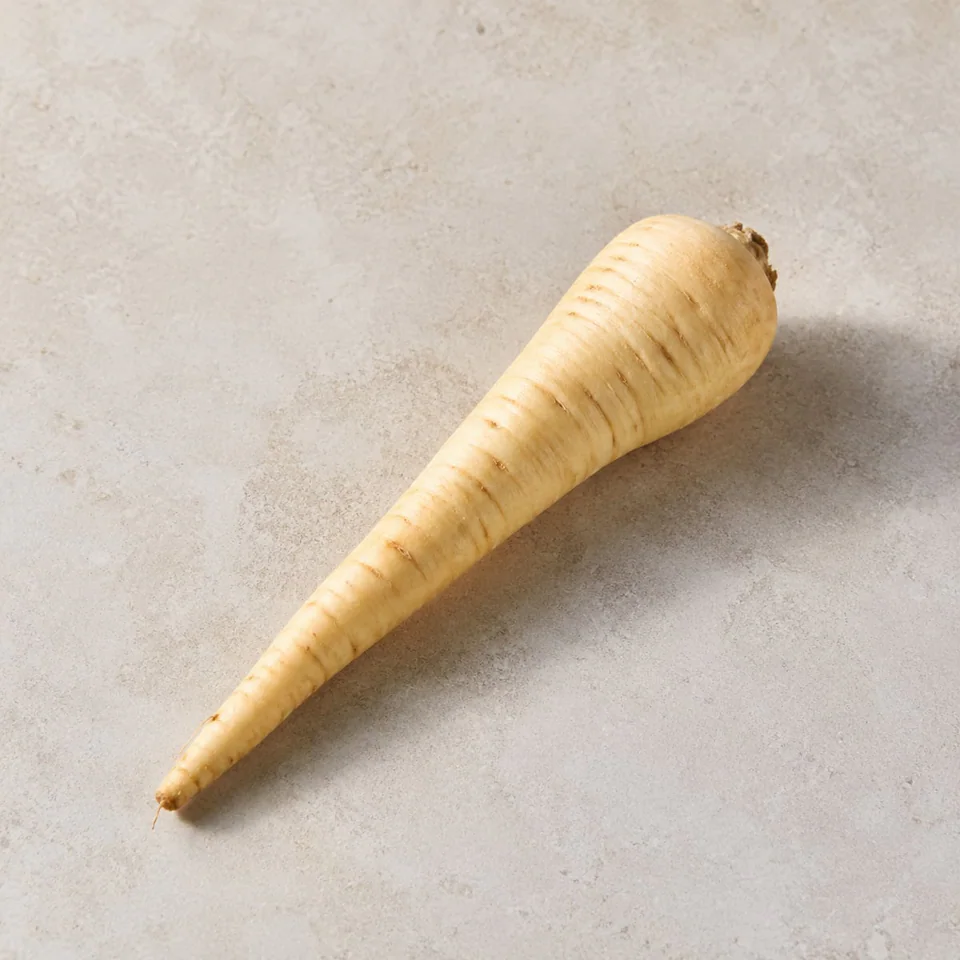
- Peeled root
- Measurement basis
- Per100 g of the food as described
- Energy (kcal)
- 87.1 kcal
- Protein
- 1.3 g
- Carbohydrates
- 19.3 g
- Fat
- 0.5 g
- Dietary fiber
- 5.4 g
- Sugars
- 5.6 g
- Saturated fat
- 0 g
- Sodium
- 0.5 mg
More nutrients26
- Energy (kJ)
- 364.3 kJ
- Added sugars
- 0 g
- Trans fat
- 0 g
- Cholesterol
- 0 mg
- Calcium
- 44.2 mg
- Potassium
- 465 mg
- Magnesium
- 25 mg
- Iron
- 0.28 mg
- Zinc
- 0.3 mg
- Vitamin B1
- 0.065 mg
- Vitamin B2
- 0.07 mg
- Vitamin B3
- 1.5 mg
- Vitamin B5
- 0.31 mg
- Vitamin B6
- 0.1 mg
- Vitamin B7
- 0.1 µg
- Vitamin B9 (folate)
- 62 µg
- Vitamin B12
- 0 µg
- Vitamin C
- 10 mg
- Vitamin D
- 0 µg
- Vitamin A (RAE)
- 0 µg
- Retinol1
- 0 µg
- Beta-carotene1
- 0 µg
- Alpha-carotene1
- 0 µg
- Beta-cryptoxanthin1
- 0 µg
- Vitamin E (alpha-tocopherol)
- 1.49 mg
- Vitamin K1 (phylloquinone)
- 22.5 µg
- Assumed zero by source