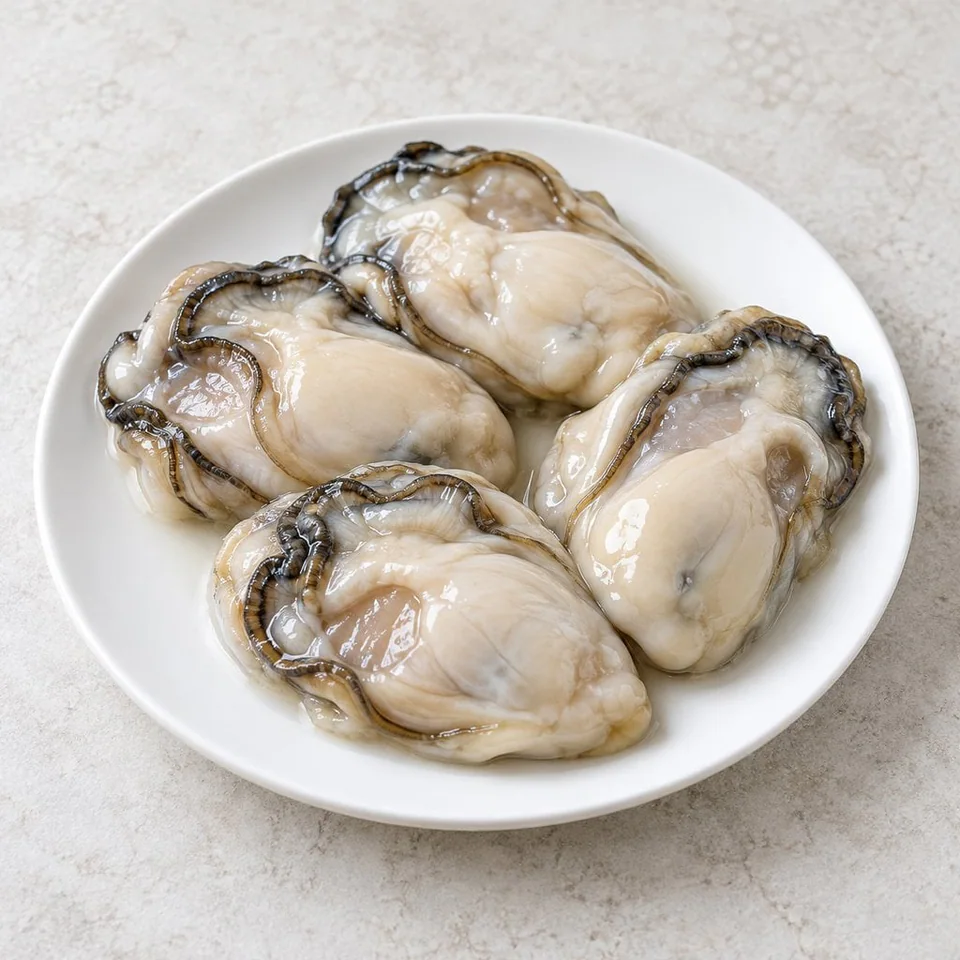
Weigh the oyster meat without the shell. This reference uses the USDA raw oyster profile; other varieties can differ.
Plan your portion
How much is in your serving of Oysters?
Nutrition values are reported per 100 g. A typical 3 oz serving (about 85 g) provides roughly 43 kcal. Use the serving sizes below to estimate portions when logging.
Calculated from the per-100-g reference. Values are rounded.
Serving
Weight
Calories
Carbs
Protein
Fat
100 g
100 g
51 kcal
2.7 g
5.7 g
1.7 g
3 oz
85 g
43.4 kcal
2.3 g
4.8 g
1.4 g
6 oysters
84 g
42.8 kcal
2.3 g
4.8 g
1.4 g
Use the weight of the edible portion in the food state shown above.
Energy (kcal)
51 kcal
Energy (kJ)
213.4 kJ
Protein
5.7 g
Carbohydrates
2.7 g
Fat
1.7 g
Dietary fiber
0 g
Sugars
0.62 g
Saturated fat
0.474 g
Cholesterol
40 mg
Sodium
85 mg
Calcium
59 mg
Potassium
156 mg
Magnesium
18 mg
Iron
4.61 mg
Zinc
39.3 mg
Vitamin B1
0.018 mg
Vitamin B2
0.09 mg
Vitamin B3
0.925 mg
Vitamin B6
0.031 mg
Vitamin B9 (folate)
7 µg
Vitamin B12
8.75 µg
Vitamin C
0 mg
Vitamin D
0 µg
Vitamin A (RAE)
13 µg
Retinol
13 µg
Beta-carotene
0 µg
Alpha-carotene
0 µg
Beta-cryptoxanthin
0 µg
Vitamin E (alpha-tocopherol)
0.85 mg
Vitamin K1 (phylloquinone)
1 µg
Questions and answers
Oysters nutrition FAQ
How many calories are in oysters?
Oysters provide about 51 calories per 100 g. A typical 3 oz serving (about 85 g) provides roughly 43 calories.
Are oysters high in protein?
Oysters provide about 5.7 g of protein per 100 g and are low in fat, making them a light source of protein.
How are oysters usually eaten?
Oysters are eaten raw on the half shell or cooked by steaming, grilling, frying, or baking. Cooking method and sauces affect the final calories.