Nutrition facts
Per 100 grams
Measurement basis
- Food state
- Ready to eat
- Edible portion
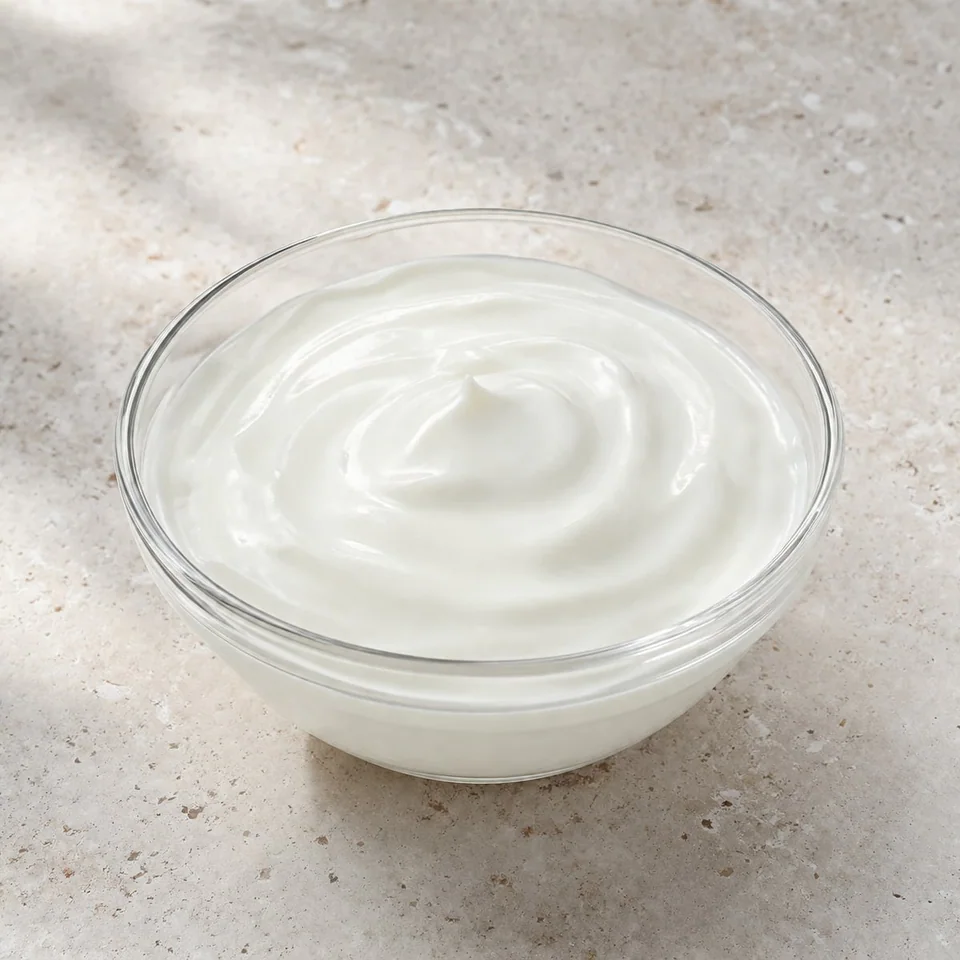
- Plain nonfat cultured yogurt
- Measurement basis
- Per 100 g plain nonfat yogurt, ready to eat
- Energy (kcal)
- 50 kcal
- Protein1
- 4.22675 g
- Carbohydrates1
- 8.07675 g
- Fat1
- 0.0875 g
- Dietary fiber
- 0 g
- Sugars
- 7.68 g
- Sodium1
- 51.48 mg
More nutrients21
- Energy (kJ)
- 209.2 kJ
- Cholesterol1
- 3.375 mg
- Calcium1
- 167.4 mg
- Potassium
- 210 mg
- Magnesium1
- 15.21 mg
- Zinc1
- 0.5989 mg
- Vitamin B1
- 0.048 mg
- Vitamin B2
- 0.234 mg
- Vitamin B3
- 0.124 mg
- Vitamin B5
- 0.641 mg
- Vitamin B6
- 0.053 mg
- Vitamin B73
- 2.1 µg
- Vitamin B9 (folate)
- 12 µg
- Vitamin B12
- 0.61 µg
- Vitamin C
- 0.9 mg
- Vitamin D1
- 0.217 µg
- Alpha-carotene4
- 0 µg
- Beta-cryptoxanthin4
- 0 µg
- Vitamin K1 (phylloquinone)
- 0.2 µg
- Below quantification limit
- Additional data source[3]
- Assumed zero by source
- Additional data source[1]